| John Cockcroft |
|---|
 |
| Nascimento | 27 de maio de 1897
Todmorden |
|---|
| Morte | 18 de setembro de 1967 (70 anos)
Cambridge |
|---|
| Sepultamento | Ascension Parish Burial Ground |
|---|
| Nacionalidade | Britânico |
|---|
| Cidadania | Reino Unido |
|---|
| Cônjuge | Elizabeth Crabtree |
|---|
| Alma mater | Universidade de Manchester, St John's College (Cambridge) |
|---|
| Ocupação | físico, físico nuclear, professor universitário |
|---|
| Distinções | Medalha Hughes (1938),  Nobel de Física (1951), Medalha Real (1954), Medalha Faraday (1955), Medalha de Ouro Kelvin (1956), Medalha de Ouro Internacional Niels Bohr (1958), Prêmio Átomos pela Paz (1961) Nobel de Física (1951), Medalha Real (1954), Medalha Faraday (1955), Medalha de Ouro Kelvin (1956), Medalha de Ouro Internacional Niels Bohr (1958), Prêmio Átomos pela Paz (1961) |
|---|
| Empregador(a) | Estabelecimento de Pesquisa em Energia Atômica, Ministério do Abastecimento, Laboratório de Montreal, Laboratórios Chalk River, Universidade Nacional da Austrália |
|---|
| Orientador(a)(es/s) | Ernest Rutherford |
|---|
| Instituições | Atomic Energy Research Establishment |
|---|
|
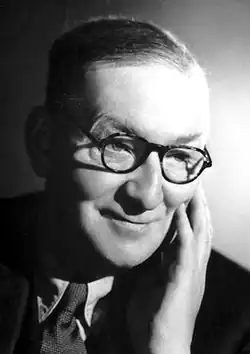
John Douglas Cockcroft (Todmorden, 27 de maio de 1897 — Cambridge, 18 de setembro de 1967) foi um físico britânico.
Recebeu em 1951 o Nobel de Física, por trabalhos pioneiros sobre transmutação de núcleos atômicos através de partícula aceleradas artificialmente.
Descendente de família tradicional no ramo algodoeiro.
Início de carreira
Os seus estudos secundários foram na Todmorden Secondary School e os estudos superiores na Universidade de Manchester, onde foi aluno de Horace Lamb entre 1914-1915.
Durante a Primeira Guerra Mundial serviu na Artilharia de Campo. Ao retornar para Universidade de Manchester estudou engenharia elétrica no College of Technology.
Pesquisas
Depois de estagiar por dois anos na Metropolitan Vickers Electrical Company, Cockcroft foi para o St. John's College, Cambridge. Em seguida foi trabalhar no Cavendish Laboratory sob a supervisão de Rutherford.
Em 1928 Cockcroft iniciou suas pesquisas com aceleradores de prótons através de altas tensões, juntamente com Ernest Walton.
Em 1932 Cockcroft e Walton conseguiram transmutar átomos de lítio e boro utilizando prótons de alta energia. Em 1933 produziram radioatividade artificial por prótons e executaram muitas transmutações produzidas por prótons e dêuterons. Em 1929 foi eleito para o grupo de colaboradores do St. John's College.
Cargos
Em 1934 Cockcroft assumiu o Royal Society Mond Laboratory em Cambridge. Em setembro de 1939 assumiu o cargo de Diretor Assistente de Pesquisa Científica no Ministério de Provisão do Reino Unido. Iniciou em seguida pesquisas para desenvolver um modelo eficiente de radar para vigiar a movimentação aérea na costa inglesa. Foi membro da Missão de Tizard nos Estados Unidos no outono de 1940. Em seguida foi designado chefe no Air Defence Research and Development Establishment.
Em 1944 indo para o Canadá, Cockcroft assumiu o projeto de energia nuclear canadense e se tornou diretor do Montreal and Chalk River Laboratories até 1946, quando retornou para a Inglaterra para assumir o cargo de diretor do Atomic Energy Research Establishment, Harwell.
Entre 1954-1959 foi membro de pesquisa científica da U.K. Atomic Energy Authority; eleito mestre no Churchill College (Cambridge); Chanceler da Australian National University, Canberra; presidente do Institute of Physics; Physical Society (1960 a 1962) e no British Association for the Advancement of Science (1961 a 1963).
Recebeu doutorados honorários em dezenove universidades, nomeadamente da Universidade de Coimbra (1955), e foi membro honorário de várias sociedades científicas.
Participou da 7ª e 8ª Conferência de Solvay.
Ligações externas
Medalha Hughes (1902 — 2020) |
|---|
1902: Joseph John Thomson
1903: Johann Wilhelm Hittorf
1904: Joseph Wilson Swan
1905: Augusto Righi
1906: Hertha Marks Ayrton
1907: Ernest Howard Griffiths
1908: Eugen Goldstein
1909: Richard Glazebrook
1910: John Ambrose Fleming
1911: Charles Thomson Rees Wilson
1912: William Duddell
1913: Alexander Graham Bell
1914: John Sealy Townsend
1915: Paul Langevin
1916: Elihu Thomson
1917: Charles Glover Barkla
1918: Irving Langmuir
1919: Charles Chree
1920: Owen Willans Richardson
1921: Niels Bohr
1922: Francis William Aston
1923: Robert Andrews Millikan
1924: —
1925: Frank Edward Smith
1926: Henry Bradwardine Jackson
1927: William David Coolidge
1928: Maurice de Broglie
1929: Hans Geiger
1930: Chandrasekhara Venkata Raman
1931: William Lawrence Bragg
1932: James Chadwick
1933: Edward Appleton
1934: Karl Siegbahn
1935: Clinton Davisson
1936: Walter Hermann Schottky
1937: Ernest Lawrence
1938: John Cockcroft e Ernest Walton
1939: George Paget Thomson
1940: Arthur Holly Compton
1941: Nevill Francis Mott
1942: Enrico Fermi
1943: Marcus Oliphant
1944: George Finch
1945: Basil Schonland
1946: John Randall
1947: Frédéric Joliot-Curie
1948: Robert Watson-Watt
1949: Cecil Powell
1950: Max Born
1951: Hendrik Anthony Kramers
1952: Philip Dee
1953: Edward Bullard
1954: Martin Ryle
1955: Harrie Massey
1956: Frederick Lindemann
1957: Joseph Proudman
1958: Edward Andrade
1959: Brian Pippard
1960: Joseph Pawsey
1961: Alan Cottrell
1962: Brebis Bleaney
1963: Frederic Calland Williams
1964: Abdus Salam
1965: Denys Wilkinson
1966: Nicholas Kemmer
1967: Kurt Mendelssohn
1968: Freeman Dyson
1969: Nicholas Kurti
1970: David Bates
1971: Robert Hanbury Brown
1972: Brian David Josephson
1973: Peter Hirsch
1974: Peter Fowler
1975: Richard Dalitz
1976: Stephen Hawking
1977: Antony Hewish
1978: William Cochran
1979: Robert Williams
1980: Francis Farley
1981: Peter Higgs, Tom Kibble
1982: Drummond Hoyle Matthews e Frederick Vine
1983: John Clive Ward
1984: Roy Kerr
1985: Tony Skyrme
1986: Michael Woolfson
1987: Michael Pepper
1988: Archibald Howie e Michael John Whelan
1989: John Stewart Bell
1990: Thomas George Cowling
1991: Philip Burton Moon
1992: Michael Seaton
1993: George Isaak
1994: Robert G. Chambers
1995: David Shoenberg
1996: Amyand Buckingham
1997: Andrew Lang
1998: Raymond Hide
1999: Alexander Boksenberg
2000: Chintamani Rao
2001: John Pethica
2002: Alexander Dalgarno
2003: Peter Edwards
2004: John Clarke
2005: Keith Moffatt
2006: Michael Kelly
2007: Artur Ekert
2008: Michele Dougherty
2010: Andre Geim
2011: Matthew Rosseinsky
2013: Henning Sirringhaus
2015: George Efstathiou
2017: Peter Bruce
2018: James Durrant
2019: Andrew Cooper
2020: Clare Grey
|
|
|---|
| 1901–1925 | |
|---|
| 1926–1950 | |
|---|
| 1951–1975 | |
|---|
| 1976–2000 |
- 1976: Richter e Ting
- 1977: P. W. Anderson, Mott e Van Vleck
- 1978: Kapitsa, Penzias e Wilson
- 1979: Glashow, Salam e Weinberg
- 1980: Cronin e Fitch
- 1981: Bloembergen, Schawlow e Siegbahn
- 1982: Wilson
- 1983: Chandrasekhar e Fowler
- 1984: Rubbia e Van der Meer
- 1985: Klitzing
- 1986: Ruska, Binnig e Rohrer
- 1987: Bednorz e Müller
- 1988: Lederman, Schwartz e Steinberger
- 1989: Ramsey, Dehmelt e Paul
- 1990: Friedman, Kendall e R. E. Taylor
- 1991: de Gennes
- 1992: Charpak, Hulse e J. H. Taylor
- 1993: Brockhouse e Shull
- 1994: Perl e Reines
- 1995: D. Lee, Osheroff e R. Richardson
- 1996: Chu, Cohen-Tannoudji e Phillips
- 1997: Laughlin, Störmer e Tsui
- 1998: Hooft e Veltman
- 1999: Alferov, Kroemer e Kilby
|
|---|
| 2001–2024 |
- 2001: Cornell, Wieman e Ketterle
- 2002: Davis, Koshiba e Giacconi
- 2003: Abrikosov, Ginzburg e Leggett
- 2004: Gross, Politzer e Wilczek
- 2005: Glauber|, Hall e Hänsch
- 2006: Mather e Smoot
- 2007: Fert e Grünberg
- 2008: Nambu, Kobayashi e Masukawa
- 2009: Kao, Boyle e G. Smith
- 2010: Geim e Novoselov
- 2011: Perlmutter, Riess e Schmidt
- 2012: Haroche e Wineland
- 2013: Englert e Higgs
- 2014: Akasaki, Amano e Nakamura
- 2015: Kajita e McDonald
- 2016: Haldane, Thouless e Kosterlitz
- 2017: Weiss, Barish e Thorne
- 2018: Ashkin, Mourou e Strickland
- 2019: Peebles, Mayor e Queloz
- 2020: Penrose, Genzel e Ghez
- 2021: Manabe, Hasselmann e Parisi
- 2022: Aspect, Clauser e Zeilinger
- 2023: Agostini, Krausz e L'Huillier
- 2024: Hopfield e Hinton
|
|---|
|
|---|
1951: Howard Florey e Ian Heilbron • 1952: Frederic Bartlett e Christopher Kelk Ingold • 1953: Paul Fildes e Nevill Francis Mott • 1954: Hans Krebs e John Cockcroft • 1955: Vincent Wigglesworth e Alexander Todd • 1956: Owen Thomas Jones e Dorothy Crowfoot Hodgkin • 1957: Frederick Gugenheim Gregory e William Vallance Douglas Hodge • 1958: Alan Hodgkin e Harrie Massey • 1959: Peter Brian Medawar e Rudolf Peierls • 1960: Roy Cameron e Bernard Lovell • 1961: Wilfrid Le Gros Clark e Cecil Frank Powell • 1962: John Eccles e Subrahmanyan Chandrasekhar • 1963: Herbert Harold Read e Robert Hill • 1964: Francis Brambell e Michael James Lighthill • 1965: Henry Charles Husband, John Kendrew e Raymond Lyttleton • 1966: Christopher Cockerell, Frank Yates e John Ashworth Ratcliffe • 1967: Joseph Hutchinson, John Zachary Young e Cecil Edgar Tilley • 1968: Gilbert Roberts, Walter Thomas James Morgan e Michael Atiyah • 1969: Charles William Oatley, Frederick Sanger e George Deacon • 1970: John Fleetwood Baker, William Albert Hugh Rushton e Kingsley Charles Dunham • 1971: Percy Edward Kent, Max Perutz e Gerhard Herzberg • 1972: Wilfrid Bennett Lewis, Francis Crick e Derek Barton • 1973: Edward Abraham, Rodney Porter e Martin Ryle • 1974: Sydney Brenner, George Edwards e Fred Hoyle • 1975: Barnes Wallis, David Chilton Phillips e Edward Bullard • 1976: Alan Walsh, James Learmonth Gowans e John Cornforth • 1977: John Adams, Hugh Huxley e Peter Hirsch • 1978: Tom Kilburn, Roderic Alfred Gregory e Abdus Salam • 1979: Vernon Ellis Cosslett, Hans Walter Kosterlitz e Frederick Charles Frank • 1980: John Paul Wild, Henry Harris e Denys Wilkinson • 1981: Ralph Riley, Marthe Louise Vogt e Geoffrey Wilkinson • 1982: César Milstein, William Hawthorne e Richard Dalitz • 1983: Daniel Joseph Bradley, Wilhelm Siegmund Feldberg e John Kingman • 1984: Alexander Lamb Cullen, Mary Frances Lyon e Alan Battersby • 1985: John Argyris, John Gurdon e Roger Penrose • 1986: Eric Ash, Richard Doll e Rex Richards • 1987: Gustav Victor Rudolf Born, Eric James Denton e Francis Graham-Smith • 1988: Harold Barlow, Winifred Watkins e George Batchelor • 1989: John Vane, David Weatherall e John Charles Polanyi • 1990: Olgierd Zienkiewicz, Anne McLaren e Michael Berry • 1991: Basil John Mason, Michael Berridge e Dan Peter McKenzie • 1992: David Tabor, Michael Anthony Epstein e Simon Donaldson • 1993: Rodney Hill, Horace Barlow e Volker Heine • 1994: Salvador Moncada, Eric Mansfield e Sivaramakrishna Chandrasekhar • 1995: Donald Metcalf, Paul Nurse e Robert Williams • 1996: Robert Hinde, Jack Heslop-Harrison e Andrew Wiles • 1997: Geoffrey Eglinton, John Maynard Smith e Donald Hill Perkins • 1998: Edwin Southern, Ricardo Miledi e Donald Charlton Bradley • 1999: John Frank Davidson, Patrick David Wall e Archibald Howie • 2000: Tim Berners-Lee, Geoffrey Burnstock e Keith Usherwood Ingold |
Medalha Faraday |
|---|
1922: Oliver Heaviside ·
1923: Charles Algernon Parsons ·
1924: Sebastian Ziani de Ferranti ·
1925: Joseph John Thomson ·
1926: Rookes Evelyn Bell Crompton ·
1927: Elihu Thomson ·
1928: John Ambrose Fleming ·
1929: Guido Semenza ·
1930: Ernest Rutherford ·
1931: Charles Hesterman Merz ·
1932: Oliver Lodge ·
1934: Frank Edward Smith ·
1935: Frank Baldwin Jewett ·
1936: William Henry Bragg ·
1937: André Blondel ·
1938: John Snell ·
1939: William David Coolidge ·
1940: Alexander Russell ·
1941: Arthur Percy Morris Fleming ·
1942: Pyotr Kapitsa ·
1943: Archibald Page ·
1944: Irving Langmuir ·
1945: Clifford Paterson ·
1946: Edward Appleton ·
1947: Leonard Pearce ·
1948: Marcus Oliphant ·
1949: Charles Samuel Franklin ·
1950: James Chadwick ·
1951: Thomas Eckersley ·
1952: Ernest Lawrence ·
1953: A. Stanley Angwin ·
1954: Isaac Shoenberg ·
1955: John Cockcroft ·
1956: G. W. O. Howe ·
1957: Waldemar Borgquist ·
1958: Gordon Radley ·
1959: Luigi Emmannueli ·
1960: George Paget Thomson ·
1961: Julius Adams Stratton ·
1962: Basil Schonland ·
1963: P. M. J. Ailleret ·
1964: Joseph Ronald Mortlock ·
1965: Vladimir Zworykin ·
1966: John Ashworth Ratcliffe ·
1967: Harold Barlow ·
1968: Leslie Herbert Bedford ·
1969: Phillip Sporn ·
1970: Charles William Oatley ·
1971: Martin Ryle ·
1972: Frederic Calland Williams ·
1973: Nevill Francis Mott ·
1974: G. Millington ·
1975: John Millar Meek ·
1976: Thomas O. Paine ·
1977: John Adams ·
1978: E. Friedlander ·
1979: Robert Noyce ·
1980: Eric Ash ·
1981: Maurice Vincent Wilkes ·
1982: Brian David Josephson ·
1983: W. A. Gambling ·
1984: Alexander Lamb Cullen ·
1985: C. A. R. Hoare ·
1986: E. D. R. Shearman ·
1987: David Davies ·
1988: Cyril Hilsum ·
1989: Charles Kao ·
1990: Peter Lawrenson ·
1991: Alan Rudge ·
1992: L. Solymar ·
1993: Alexander MacFarlane ·
1994: John Parnaby ·
1995: John David Rhodes ·
1996: S. C. Miller ·
1997: John Midwinter ·
1998: Roger Needham ·
1999: P. A. McKeown ·
2000: Michael Brady ·
2001: Chris Harris ·
2002: Robin Saxby ·
2003: Richard Friend ·
2004: Peter Grant ·
2005: Azim Premji ·
2006: John McCanny ·
2007: Steve Furber ·
2008: Josef Kittler ·
2009: Martin Sweeting ·
2010: Donal Bradley ·
2011: Donald Knuth ·
2012: Leonardo Chiariglione ·
2013: Michael Pepper ·
2014: Chris Toumazou ·
2015: Kees Schouhamer Immink ·
2016: Andy Harter ·
2017: Bjarne Stroustrup ·
2018: não concedida ·
2019: Peter Knight ·
2020: Bashir Al-Hashimi ·
2021: John E E Fleming ·
2023: Arogyaswami Paulraj
|
|
|---|
Linha do tempo |
| Locais |
- Ames
- Berkeley
- Chicago
- Dayton
- Hanford
- Inyokern
- Los Alamos
- Montreal
- Oak Ridge
- Trinity
- Wendover
- Heavy water sites
| |
|---|
| Administradores | |
|---|
| Cientistas | |
|---|
| Operações | |
|---|
| Armas | |
|---|
| Tópicos relacionados |
- Projeto de Armas Especiais para as Forças Armadas
- Atomic Energy Act of 1946
- Contribuição britânica para o Projeto Manhattan
- Chicago Pile-1
- Demon Core
- Carta Einstein-Szilárd
- Comitê Interino
- Audiência de segurança de Oppenheimer
- Plutônio
- Experimento RaLa
- Smyth Report
- Urânio
- Reator de Grafite X-10
- Projeto Dayton
|
|---|
 Projeto Manhattan |