Isidor Isaac Rabi
| Isidor Isaac Rabi | |
|---|---|
 | |
| Nascimento | 29 de julho de 1898 Rymanów |
| Morte | 11 de janeiro de 1988 (89 anos) Nova Iorque |
| Sepultamento | Riverside Cemetery |
| Nacionalidade | Estadunidense |
| Cidadania | Estados Unidos, Cisleitânia |
| Cônjuge | Helen Newmark |
| Alma mater | Universidade Cornell, Universidade Columbia |
| Ocupação | físico, físico nuclear, professor universitário, físico teórico |
| Distinções | Medalha Elliott Cresson (1942),[1]  Nobel de Física (1944), Prêmio Átomos pela Paz (1967), Medalha de Ouro Internacional Niels Bohr (1967), Prêmio Vannevar Bush (1986) Nobel de Física (1944), Prêmio Átomos pela Paz (1967), Medalha de Ouro Internacional Niels Bohr (1967), Prêmio Vannevar Bush (1986) |
| Empregador(a) | Universidade Columbia, Instituto de Tecnologia de Massachusetts |
| Orientador(a)(es/s) | Albert Potter Wills |
| Instituições | Universidade Columbia, Instituto de Tecnologia de Massachusetts |
| Religião | Judaísmo |
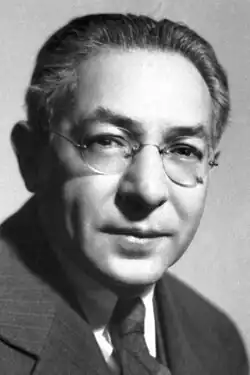
Isidor Isaac Rabi (Rymanów, 29 de julho de 1898 — Nova Iorque, 11 de janeiro de 1988) foi um físico estadunidense. Recebeu o Nobel de Física de 1944, pelo método de registro de propriedades de ressonância magnética de núcleos atômicos. Também participou no desenvolvimento da cavidade de magnetron, o qual é utilizado em radares e fornos de microondas.
Vida
Nascido em uma família judaica polonesa tradicional em Rymanów, na Galícia, Rabi veio para os Estados Unidos ainda bebê e foi criado no Lower East Side de Nova York. Ele entrou na Universidade Cornell como estudante de engenharia elétrica em 1916, mas logo mudou para química. Mais tarde, ele se interessou pela física . Ele continuou seus estudos na Universidade Columbia, onde obteve seu doutorado por uma tese sobre a suscetibilidade magnética de certos cristais. Em 1927, foi para a Europa, onde conheceu e trabalhou com muitos dos melhores físicos da época.[2]
Em 1929, Rabi retornou aos Estados Unidos, onde a Columbia lhe ofereceu um cargo de professor. Em colaboração com Gregory Breit, ele desenvolveu a equação Breit-Rabi e previu que o experimento de Stern-Gerlach poderia ser modificado para confirmar as propriedades do núcleo atômico. Suas técnicas para usar a ressonância magnética nuclear para discernir o momento magnético e o spin nuclear dos átomos lhe renderam o Prêmio Nobel de Física em 1944. A ressonância magnética nuclear tornou-se uma ferramenta importante para a física e química nuclear, e o subsequente desenvolvimento da ressonância magnética também o tornou importante para o campo da medicina.[3][4]
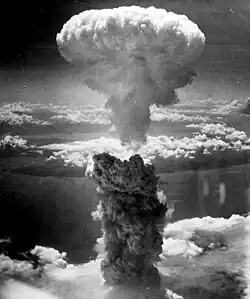
Durante a Segunda Guerra Mundial, ele trabalhou em radar no Laboratório de Radiação do Instituto de Tecnologia de Massachusetts (MIT) (RadLab) e no Projeto Manhattan. Após a guerra, ele serviu no Comitê Consultivo Geral (GAC) da Comissão de Energia Atômica, e foi presidente de 1952 a 1956. Ele também atuou nos Comitês Consultivos Científicos (SACs) do Escritório de Mobilização de Defesa e Pesquisa Balística do Exército Laboratório, e foi Conselheiro Científico do Presidente Dwight D. Eisenhower. Ele esteve envolvido com o estabelecimento do Laboratório Nacional de Brookhavenem 1946, e mais tarde, como delegado dos Estados Unidos na UNESCO, com a criação do CERN em 1952. Quando a Columbia criou o posto de Professor Universitário em 1964, Rabi foi o primeiro a receber esse cargo. Uma cadeira especial foi nomeada em sua homenagem em 1985. Ele se aposentou do ensino em 1967, mas permaneceu ativo no departamento e manteve o título de Professor Universitário Emérito e Conferencista Especial até sua morte.[5][6]
Livros
- Rabi, Isidor Isaac (1960). My Life and Times as a Physicist. Claremont, California: Claremont College. OCLC 1071412
- Rabi, Isidor Isaac (1970). Science: The Center of Culture. New York: World Publishing Co. OCLC 74630
- Rabi, Isidor Isaac; Serber, Robert; Weisskopf, Victor F.; Pais, Abraham; Seaborg, Glenn T. (1969). Oppenheimer: The Story of One of the Most Remarkable Personalities of the 20th Century. [S.l.]: Scribner's. OCLC 223176672
Referências
- ↑ «Laureates» (pdf) (em inglês). The Franklin Institute. Consultado em 1 de julho de 2015. Cópia arquivada em 1 de julho de 2015
- ↑ Ramsey, Norman (1993). I. I. Rabi 1898–1988. Col: Biographical memoirs. 62. Washington, DC: National Academies Press. ISBN 0-585-14673-X. OCLC 45729831
- ↑ Breit, G.; Rabi, I.I. (1934). «On the interpretation of present values of nuclear moments». Physical Review. 46 (3): 230–31. Bibcode:1934PhRv...46..230B. doi:10.1103/PhysRev.46.230
- ↑ Goldstein, Jack S (1992). A Different Sort of Time: The Life of Jerrold R. Zacharias. Cambridge, MA: MIT Press. ISBN 0-262-07138-X. OCLC 24628294
- ↑ Hewlett, Richard G; Anderson, Oscar E. (1962). The New World, 1939–1946. University Park: Pennsylvania State University Press. ISBN 0-520-07186-7. OCLC 637004643
- ↑ Rabi, I.I. (1927). «On the Principal Magnetic Susceptibilities of Crystals». Physical Review. 29 (1): 174–85. Bibcode:1927PhRv...29..174R. doi:10.1103/PhysRev.29.174
Rabi, I.I. (1929). «Refraction of Beams of Molecules». Nature. 123 (3092): 163–64. Bibcode:1929Natur.123..163R. doi:10.1038/123163b0
Rabi, I.I. (1929). «Zur Methode der Ablenkung von Molekularstrahlen». Zeitschrift für Physik (em alemão). 54 (3–4): 190–97. Bibcode:1929ZPhy...54..190R. doi:10.1007/BF01339837
Rabi, I.I.; Kellogg, J.M.; Zacharias, J.R. (1934a). «The magnetic moment of the proton». Physical Review. 46 (3): 157–63. Bibcode:1934PhRv...46..157R. doi:10.1103/PhysRev.46.157
Rabi, I.I.; Kellogg, J.M.; Zacharias, J.R. (1934b). «The magnetic moment of the deuton». Physical Review. 46 (3): 163–65. Bibcode:1934PhRv...46..163R. doi:10.1103/PhysRev.46.163
Rabi, I.I.; Zacharias, J.R.; Millman, S.; Kusch, P. (1938). «A New Method of Measuring Nuclear Magnetic Moment». Physical Review. 53 (4): 318. Bibcode:1938PhRv...53..318R. doi:10.1103/PhysRev.53.318
 Rabi, I.I.; Millman, S.; Kusch, P.; Zacharias, J.R. (1939). «The Molecular Beam Resonance Method for Measuring Nuclear Magnetic Moments. The Magnetic Moments of 3Li6, 3Li7 and 9F19». Physical Review. 55 (6): 526–35. Bibcode:1939PhRv...55..526R. doi:10.1103/PhysRev.55.526
Rabi, I.I.; Zacharias, J.R.; Millman, S.; Kusch, P. (1992). «Milestones in Magnetic Resonance: 'A new method of measuring nuclear magnetic moment'. 1938». Journal of Magnetic Resonance Imaging. 2 (2): 131–33. PMID 1562763. doi:10.1002/jmri.1880020203
Rabi, I.I.; Millman, S.; Kusch, P.; Zacharias, J.R. (1939). «The Molecular Beam Resonance Method for Measuring Nuclear Magnetic Moments. The Magnetic Moments of 3Li6, 3Li7 and 9F19». Physical Review. 55 (6): 526–35. Bibcode:1939PhRv...55..526R. doi:10.1103/PhysRev.55.526
Rabi, I.I.; Zacharias, J.R.; Millman, S.; Kusch, P. (1992). «Milestones in Magnetic Resonance: 'A new method of measuring nuclear magnetic moment'. 1938». Journal of Magnetic Resonance Imaging. 2 (2): 131–33. PMID 1562763. doi:10.1002/jmri.1880020203
Fontes
- Conant, Jennet (2002). Tuxedo Park: A Wall Street Tycoon and the Secret Palace of Science That Changed the Course of World War II (em inglês). Nova Iorque: Simon & Schuster. ISBN 0-684-87287-0. OCLC 48966735
- Goldstein, Jack S. (1992). A Different Sort of Time: The Life of Jerrold R. Zacharias (em inglês). Cambridge, Massachusetts: MIT Press. ISBN 0-262-07138-X. OCLC 24628294
- Breit, G.; Rabi, I.I. (1934). «On the interpretation of present values of nuclear moments». Physical Review. 46 (3): 230–31. Bibcode:1934PhRv...46..230B. doi:10.1103/PhysRev.46.230
- Conant, Jennet (2002). Tuxedo Park: A Wall Street Tycoon and the Secret Palace of Science That Changed the Course of World War II. New York: Simon & Schuster. ISBN 0-684-87287-0. OCLC 48966735
- Friedman, Norman (1994). US Submarines Since 1945: An Illustrated Design History. Annapolis, MD: United States Naval Institute. ISBN 1-55750-260-9. OCLC 29477981
- Hewlett, Richard G; Duncan, Francis (1969). Atomic Shield, 1947–1952. Col: A History of the United States Atomic Energy Commission. University Park: Pennsylvania State University Press. ISBN 0-520-07187-5. OCLC 3717478
- Kellogg, J.M.B.; Rabi, I.I.; Ramsey, N.F. Jr.; Zacharias, J.R. (1939). «The Magnetic Moment of the Proton and the Deuteron. The Radiofrequency Spectrum of 2H in Various Magnetic Fields». Physical Review. 56 (8): 728–43. Bibcode:1939PhRv...56..728K. doi:10.1103/PhysRev.56.728
- Kronig, R. de L.; Rabi, I.I. (1928). «The Symmetrical Top in the Undulatory Mechanics». Physical Review. 29 (2): 262–69. Bibcode:1927PhRv...29..262K. doi:10.1103/PhysRev.29.262
- MacKenzie, Donald (2001). Mechanizing Proof: Computing, Risk, and Trust. Cambridge, MA: MIT Press. ISBN 0-262-13393-8. OCLC 45835532
- Millman, S (1977). «Recollections of a Rabi Student of the Early Years in the Molecular Beam Laboratory». Transactions of the New York Academy of Sciences. 38: 87–105. doi:10.1111/j.2164-0947.1977.tb02951.x
- Rhodes, Richard (1986). The Making of the Atomic Bomb. New York: Simon & Schuster. ISBN 0-671-44133-7. OCLC 13793436
- Rigden, John S. (1987). Rabi, Scientist and Citizen. Col: Sloan Foundation Series. New York: Basic Books. ISBN 0-465-06792-1. OCLC 14931559
- Toennies, J.P. in; Schmidt-Böcking, H.; Friedrich, B.; Lower, J.C.A. (2011). «Otto Stern (1888–1969): The Founding Father of Experimental Atomic Physics». Annalen der Physik. 523 (12): 1045–70. Bibcode:2011AnP...523.1045T. arXiv:1109.4864. doi:10.1002/andp.201100228
Ligações externas
- Isidor Isaac Rabi em Nobelprize.org
- «Perfil no sítio oficial do Nobel de Física 1944» (em inglês)
| Precedido por Otto Stern |
Nobel de Física 1944 |
Sucedido por Wolfgang Pauli |
Linha do tempo | ||
| Locais |
|  |
| Administradores |
| |
| Cientistas |
| |
| Operações |
| |
| Armas |
| |
| Tópicos relacionados |
| |
 Projeto Manhattan Projeto Manhattan | ||
| Controle de autoridade |
|
|---|
