Mary Robinson (poetisa)
| Mary Robinson | |
|---|---|
 | |
| Nascimento | Mary Darby 27 de novembro de 1758 Bristol |
| Morte | 26 de dezembro de 1800 (42 anos) Englefield Green |
| Cidadania | Reino da Grã-Bretanha |
| Progenitores |
|
| Cônjuge | Thomas Robinson |
| Filho(a)(s) | Maria Elizabeth Robinson |
| Ocupação | poetisa, romancista, escritora, atriz, amante real |
| Obras destacadas | Ainsi va le Monde. A Poem Inscribed to Robert Merry, Angelina. A Novel, in a Series of Letters, Hubert de Sevrac, a Romance of the Eighteenth Century, Lyrical Tales, Memoirs of the Late Mrs. Robinson, Modern Manners: a Poem, Monody to the Memory of Sir Joshua Reynolds, Monody to the Memory of the Late Queen of France, Ode to the Harp of the Late Accomplished and Amiable Louisa Hanway, Poems by Mrs. Robinson. Volume II, Poems by Mrs. M. Robinson, Sappho and Phaon, Sight, the Cavern of Woe, and Solitude, The Beauties of Mrs. Robinson, The False Friend, The Natural Daughter. With Portraits of the Leadenhead Family, The Poetical Works of the Late Mrs. Mary Robinson, The Sicilian Lover, The Widow; or, a Picture of Modern Times, Vancenza; or, the Dangers of Credulity, Walsingham, or the Pupil of Nature |
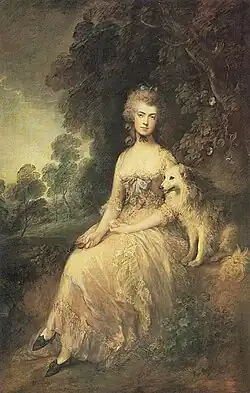
Mary Robinson, nascida Darby (Bristol, 27 de novembro de 1757 - Englefield Green, 26 de dezembro de 1800) foi uma atriz, poetisa, dramaturga, romancista e celebridade britânica. Filha de Nicholas Derby, um capitão de fragata e mercader de Bristol, e de Hester Vanacott, Mary morou na Inglaterra, França e Alemanha. Sua paixão pela poesia remontava a infância; Robinson começou a escrever aos 7 anos e aos 14 já trabalhava, primeiro como professora e depois como atriz. Ela escreveu muitas peças, poemas e romances. Ela era uma celebridade, destaque nos jornais, famosa por sua atuação e escrita. Durante sua vida, ela ficou conhecida como "a Safo Inglesa".[1][2]
Em 1779, ela interpretou Perdita, personagem da peça Conto de Inverno, de Shakespeare. Durante esta apresentação, ela atraiu a atenção do Príncipe de Gales, que mais tarde se tornou o rei Jorge IV do Reino Unido, e ambos se tornaram amantes.[3][4][5]
Obras
Poemas
- Poems by Mrs. Robinson (Londres: C. Parker, 1775) Publicação digital
- Captivity, a Poem and Celadon and Lydia, a Tale. Dedicated, by Permission, to Her Grace the Duchess of Devonshire. (Londres: T. Becket, 1777)
- Ainsi va le Monde, a Poem. Inscribed to Robert Merry, Esq. A.M. [Laura Maria] (Londres: John Bell, 1790) Publicação digital
- Poems by Mrs. M. Robinson (Londres: J. Bell, 1791) Publicação digital
- The Beauties of Mrs. Robinson (Londres: H. D. Symonds, 1791)
- Monody to the Memory of Sir Joshua Reynolds, Late President of the Royal Academy, &c. &c. &c. (Londres: J. Bell, 1792)
- Ode to the Harp of the Late Accomplished and Amiable Louisa Hanway (Londres: John Bell, 1793)
- Modern Manners, a Poem. In Two Cantos. By Horace Juvenal (Londres: Printed for the Author, 1793)
- Sight, the Cavern of Woe, and Solitude. Poems (Londres: T. Spilsbury and Son, 1793)
- Monody to the Memory of the Late Queen of France (Londres: T. Spilsbury and Son, 1793)
- Poems by Mrs. M. Robinson. Volume the Second (Londres: T. Spilsbury and Son, 1793)
- Poems, by Mrs. Mary Robinson. A New Edition (Londres: T. Spilsbury, 1795)
- Sappho and Phaon. In a Series of Legitimate Sonnets, with Thoughts on Poetical Subjects, and Anecdotes of the Grecian Poetess (Londres: For the Author, 1796) Publicação digital
- Lyrical Tales, by Mrs. Mary Robinson (Londres: T. N. Longman and O. Rees, 1800) Publicação digital
- The Mistletoe. --- A Christmas Tale [Laura Maria] (Londres: Laurie & Whittle, 1800)
Romances
- Vancenza; or, the Dangers of Credulity. In Two Volumes (Londres: Printed for the Authoress, 1792)
- The Widow, or a Picture of Modern Times. A Novel, in a Series of Letters, in Two Volumes (Londres: Hookham and Carpenter, 1794)
- Angelina; a Novel, in Three Volumes (Londres: Printed for the Author, 1796)
- Hubert de Sevrac, a Romance, of the Eighteenth Century (Londres: Printed for the Author, 1796)
- Walsingham; or, the Pupil of Nature. A Domestic Story (Londres: T. N. Longman, 1797)
- The False Friend: a Domestic Story (Londres: T. N. Longman and O. Rees, 1799)
- Natural Daughter. With Portraits of the Leadenhead Family. A Novel (Londres: T. N. Longman and O. Rees, 1799)
Dramas
- The Lucky Escape, A Comic Opera (performed on 23 April 1778 at the Theatre Royal, Drury Lane)
- The Songs, Chorusses, &c. in The Lucky Escape, a Comic Opera, as Performed at the Theatre-Royal, in Drury-Lane (Londres: Printed for the Author, 1778)
- Kate of Aberdeen (a comic opera withdrawn in 1793 and never staged)
- Nobody. A Comedy in Two Acts (performed on 27 November 1794 at the Theatre Royal, Drury Lane) Publicação digital
- The Sicilian Lover. A Tragedy. In Five Acts (Londres: Printed for the Author, 1796)
Referências
- ↑ Mary Robinson, Sappho and Phaon, About the Book
- ↑ Judith Pascoe, Romantic Theatricality, Cornell University Press, 1997, ISBN 0-8014-3304-5, p. 13.
- ↑ «Mary Darby Robinson (1758-1800)». digital.library.upenn.edu. Consultado em 27 de outubro de 2019
- ↑ De Haya-Taillefer, Lidia (2008). «Mary Robinson». Orígenes del feminismo: Textos ingleses de los siglos XVI y XVII (em espanhol). [S.l.]: Narcea, S.A de Ediciones., España. p. 227. Consultado em 28 de novembro de 2019
- ↑ A. Waters, Mary (2009). «Mary Robinson (1758-1800)». British Women Writers of the Romantic Period: An Anthology of Their Literary (em inglês). [S.l.]: Palgrave Macmillan. p. 79. Consultado em 28 de novembro de 2019
Ligações externas
 Media relacionados com Mary Robinson (poetisa) no Wikimedia Commons


