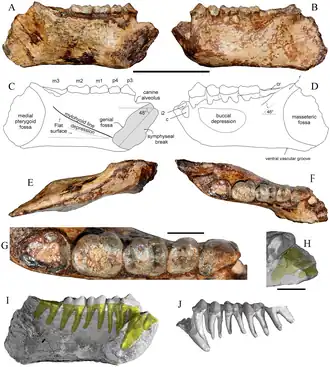
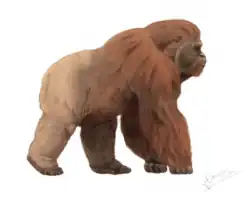
O Khorapithecus é um gênero extinto de primatas que viveram durante o final do Mioceno (9-7 milhões de anos atrás) no Sudeste da Ásia. Há três espécies que pertencem a este gênero:
- Khoratpithecus chiangmuanensis (Chaimanee, Jolly, Benammi, Tafforeau, Duzer, Moussa & Jaeger, 2003) (anteriormente chamado Lufengpithecus ' chiangmuanensis ')
- Khoratpithecus piriyai Chaimanee, Suteethorn, Jintasakul, Vidthayanon, Marandat & Jaeger, 2004
- Khoratpithecus ayeyarwadyensis Jaeger, Soe, Chavasseau, Coster, Emonet, Guy, Lebrun, Maung, Shwe, Tun, Oo, Rugbumrung, Bocherens, Benammi, Chaivanich, Tafforeau & Chaimanee, 2011
Ver também
Referências
|
|---|
|
|
|---|
|
- Altanius?
- Altiatlasius?
- Bownomomys
- Kohatius
| | Microchoerinae |
- Indusomys
- Melaneremia
- Microchoerus
- Nannopithex
- Necrolemur
- Paraloris
- Pseudoloris
- Quercyloris
- Vectipithex
|
|---|
| "Anaptomorphinae" |
- Absarokius
- Anaptomorphus
- Anemorhysis
- Arapahovius
- Aycrossia
- Chlororhysis
- Gazinius
- Pseudotetonius
- Sphacorhysis
- Strigorhysis
- Tatmanius
- Teilhardina
- Tetonius
- Tetonoides
- Trogolemur
- Walshina
|
|---|
| "Omomyinae" |
- Ageitodendron
- Asiomomys
- Brontomomys
- Chipetaia
- Chumashius
- Diablomomys
- Dyseolemur
- Ekwiiyemakius
- Gunnelltarsius
- Hemiacodon
- Jemezius
- Loveina
- Macrotarsius
- Nesomomys
- Omomys
- Ourayia
- Rooneyia
- Shoshonius
- Steinius
- Stockia
- Uintanius
- Utahia
- Washakius
- Wyomomys
- Yaquius
|
|---|
| Tarkadectinae |
- Tarka
- Tarkadectes
- Tarkops
|
|---|
|
|---|
|
| |
|
|
|---|
|
- †Altiatlasius?
- †Amamria
- †Aseanpithecus
- †Nosmips?
- †Phileosimias?
| | †Afrotarsiidae? | |
|---|
| †Eosimiidae |
- Bahinia
- Eosimias
- Phenacopithecus
|
|---|
| †Amphipithecidae |
- Amphipithecus
- Bugtipithecus?
- Ganlea
- Krabia
- Myanmarpithecus
- Pondaungia
- Siamopithecus
|
|---|
| †Parapithecoidea | | | Proteopithecidae | |
|---|
| Parapithecidae |
- Abuqatrania
- Apidium
- Parapithecus
- Qatrania
- Ucayalipithecus
|
|---|
|
|---|
| | |
|---|
|
|
|---|
| |
|
|
|---|
| | | †Oligopithecidae |
- Catopithecus
- Oligopithecus
- Talahpithecus
|
|---|
| †Propliopithecidae | |
|---|
| †Pliopithecoidea |
- Krishnapithecus
- Paidopithex
- †Kapi
| | Pliopithecidae |
- Epipliopithecus
- Pliopithecus
|
|---|
| Dionysopithecidae |
- Dionysopithecus
- Platodontopithecus
|
|---|
| Crouzeliidae |
- Anapithecus
- Barberapithecus
- Crouzelia
- Egarapithecus
- Fanchangia
- Laccopithecus
- Plesiopliopithecus
- Pliobates
|
|---|
|
|---|
| | | | †Victoriapithecidae |
- Noropithecus
- Nsungwepithecus?
- Prohylobates?
- Victoriapithecus
- Zaltanpithecus
|
|---|
| Colobinae | |
|---|
| Cercopithecinae | |
|---|
|
|---|
|
|
|---|
| |
|
|
|---|
| | | †Dendropithecidae |
- Dendropithecus
- Micropithecus?
- Nyanzapithecus
- Oreopithecus?
- Rangwapithecus
- Rukwapithecus
- Simiolus
- Turkanapithecus
|
|---|
| Hylobatidae | |
|---|
| | |
|---|
|
|---|
| |
|