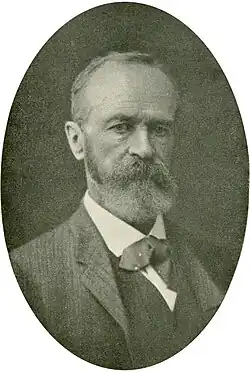
Charles Tart
| Charles Tart | |
|---|---|
 | |
| Nascimento | 29 de abril de 1937 Morrisville, Estados Unidos |
| Morte | 5 de março de 2025 (87 anos) |
| Cidadania | Estados Unidos |
| Alma mater | |
| Ocupação | psicólogo, professor universitário |
| Empregador(a) | Universidade da Califórnia em Davis, Universidade de Nevada |
Charles T. Tart (Morrisville, 29 de abril de 1937 – 5 de março de 2025)[1] foi um psicólogo e parapsicólogo norte-americano internacionalmente conhecido pelo seu trabalho psicológico na natureza da consciência, — particularmente nos estados alterados de consciência, — sendo um dos fundadores no campo da psicologia transpessoal, e pela sua pesquisa científica na Parapsicologia.
Carreira
Seus primeiros livros, Altered States of Consciousness (Estados Alterados da Consciência) de 1969 e Transpersonal Psychologies (Psicologia Transpessoal) de 1975, tornaram-se textos largamente usados que foram determinantes em permitir a área da psicologia transpessoal se tornar parte da Psicologia moderna. Ele obteve seu doutoramento em Psicologia pela Universidade da Carolina do Norte em Chapel Hill em 1963, e, em seguida realizou seu pós-doutorado pela Universidade de Stanford, com uma pesquisa sobre hipnose em parceria com Ernest Hilgard.[2] Ele também já foi um ativo radioamador e já trabalhou como engenheiro em radiocomunicação.[3]
Bem como um pesquisador de laboratório, Tart foi um aluno da arte marcial japonesa Aikido (em que ele foi faixa preta), de meditação, de trabalhos de Gurdjieff, do Budismo e de outras disciplinas psicológicas e espirituais de crescimento. Tart acreditava que a evidência do paranormal estava colocando a ciência e o espírito juntos.[4] Seu principal objetivo foi construir pontes entre as comunidades científicas e espirituais, e promover a integração entre ocidentais e orientais, para elevar o crescimento pessoal e social de ambos.[2]
Experimento OBE
Em 1968, Tart conduziu um experimento de experiência fora do corpo (OBE) com uma cobaia conhecida como Miss Z por quatro noites em seu laboratório do sono.[5] A senhorita Z estava ligada a uma máquina de EEG e um código de cinco dígitos foi colocado em uma prateleira acima de sua cama. Ela não afirmou ter visto o número nas três primeiras noites, mas na quarta deu o número corretamente.[6][7]
Durante o experimento, Tart monitorou o equipamento na sala ao lado, atrás de uma janela de observação, no entanto, ele admitiu que ocasionalmente cochilou durante a noite.[8] Os psicólogos Leonard Zusne e Warren Jones escreveram que a possibilidade de o sujeito ter obtido o número por meios sensoriais comuns não foi descartada durante o experimento. Por exemplo, quando a luz incidia sobre o código, ela era refletida na superfície de um relógio localizado na parede acima da prateleira. O sujeito não foi constantemente observado e também foi sugerido que ela pode ter lido o número quando estava sendo conectada à máquina de EEG.[6] De acordo com o mágico Milbourne Christopher: "Se ela tivesse segurado um espelho com uma alça na mão direita, inclinando o espelho e olhando para cima, ela poderia ter visto um reflexo do papel na prateleira ... A mulher não havia sido revistada antes do experimento, nem um observador estava na câmara de dormir com ela - precauções que deveriam ter sido tomadas".[9]
O psicólogo James Alcock criticou o experimento por controles inadequados e questionou por que o sujeito não foi monitorado visualmente por uma câmera de vídeo.[10] Martin Gardner escreveu que o experimento não era evidência de uma EFC e sugeriu que, enquanto Tart estava "roncando atrás da janela, a senhorita Z simplesmente se levantou na cama, sem soltar os eletrodos, e espiou".[11] Susan Blackmore escreveu: "Se a senhorita Z tivesse tentado subir, o registro de ondas cerebrais teria mostrado um padrão de interferência. E foi exatamente isso que mostrou".[12]
O experimento não foi repetido no laboratório. Tart escreveu que isso ocorreu porque a senhorita Z se mudou da área onde o laboratório estava localizado.[13]
Livros publicados
- Altered States of Consciousness (1969), editor. ISBN 0-471-84560-4
- Transpersonal Psychologies (1975)
- On Being Stoned: A Psychological Study of Marijuana Intoxication (1971)
- States of Consciousness (1975)
- Symposium on Consciousness (1975) com P. Lee, R. Ornstein, D. Galin & A. Deikman
- Learning to Use Extrasensory Perception (1976)
- Psi: Scientific Studies of the Psychic Realm (1977)
- Mind at Large: Institute of Electrical and Electronics Engineers Symposia on the Nature of Extrasensory Perception (1979, com Harold E. Puthoff e Russell Targ)
- Waking Up: Overcoming the Obstacles to Human Potential (1986)
- Open Mind, Discriminating Mind: Reflections on Human Possibilities (1989)
- Living the Mindful Life (1994)
- Body Mind Spirit: Exploring the Parapsychology of Spirituality (1997)
- Mind Science: Meditation Training for Practical People (2001)
- States of Consciousness (2001). ISBN 0-595-15196-5
- The End of Materialism: How Evidence of the Paranormal is Bringing Science and Spirit Together (2009) ISBN 978-1572246454
Ele já teve mais de 250 artigos publicados em revistas e livros profissionais, incluindo grandes artigos em revistas científicas como Science e Nature.[14]
Referências
- ↑ «Charles Tart». Psi Encyclopedia. Consultado em 16 de março de 2025
- ↑ a b «Charles Tart Contributions to Parapsychology». IONS (em inglês). Consultado em 23 de abril de 2025
- ↑ Greg (30 de abril de 2004). «Inside the Mind of Charles T. Tart». The Daily Grail (em inglês). Consultado em 23 de abril de 2025
- ↑ The End of Materialism: How Evidence of the Paranormal is Bringing Science and Spirit Together by Charles T. Tart, New Harbinger Publications, 2009
- ↑ Charles Tart. (1968). A Psychophysiological Study of Out-of-the-Body Experiences in a Selected Subject. Journal of the American Society for Psychical Research 62: 3-27.
- ↑ a b Leonard Zusne, Warren H. Jones (1989). Anomalistic Psychology: A Study of Magical Thinking. Lawrence Erlbaum Associates. p. 126. ISBN 0-8058-0508-7
- ↑ Robert Todd Carroll. (2003). The Skeptic's Dictionary. Wiley. p. 110. ISBN 0-471-27242-6
- ↑ Milbourne Christopher. (1979). Search For The Soul: An Insider's Report On The Continuing Quest By Psychics and Scientists For Evidence Of Life After Death. Crowell. pp. 90-91. ISBN 978-0690017601 "Dr. Tart himself noted in his article, which was revised for Edgar D. Mitchell's Psychic Exploration (1974): that the woman "might have concealed a mirror and telescoping rod in her pajamas" and peeked at the shelf "when she thought I might not be looking through the observation window." The woman had not been searched prior to the experiment, nor had an observer been in the sleep chamber with her — precautions that should have been taken. Dr. Tart admitted in his article, but not in the book, that "occasionally I dozed during the night beside the equipment." Could the subject have known when the parapsychologist was napping? Yes — the room in which he sat was lit, and she could see, as he himself did, through the partially open slats of the venetian blind on the window between the two rooms....Dr. Tart wrote the target digits about two inches high "with a black marking pen." The large size would make it easier for the subject to see them — if trickery was used. Another possibility for cheating — mentioned in Dr. Tart's article but excluded from the book — was that the number might have been reflected by the glass face of the wall clock above the shelf."
- ↑ Milbourne Christopher. (1979). Search For The Soul: An Insider's Report On The Continuing Quest By Psychics and Scientists For Evidence Of Life After Death. Crowell. pp. 90-91. ISBN 978-0690017601 "Dr. Tart himself noted in his article, which was revised for Edgar D. Mitchell's Psychic Exploration (1974): that the woman "might have concealed a mirror and telescoping rod in her pajamas" and peeked at the shelf "when she thought I might not be looking through the observation window." The woman had not been searched prior to the experiment, nor had an observer been in the sleep chamber with her — precautions that should have been taken. Dr. Tart admitted in his article, but not in the book, that "occasionally I dozed during the night beside the equipment." Could the subject have known when the parapsychologist was napping? Yes — the room in which he sat was lit, and she could see, as he himself did, through the partially open slats of the venetian blind on the window between the two rooms....Dr. Tart wrote the target digits about two inches high "with a black marking pen." The large size would make it easier for the subject to see them — if trickery was used. Another possibility for cheating — mentioned in Dr. Tart's article but excluded from the book — was that the number might have been reflected by the glass face of the wall clock above the shelf."
- ↑ James Alcock. (1981). Parapsychology-Science Or Magic?: A Psychological Perspective. Pergamon Press. pp. 130-131. ISBN 978-0080257730
- ↑ Martin Gardner. (1989). How Not To Test A Psychic: 10 Years of Remarkable Experiments with Renowned Clairvoyant Pavel Stepanek. Prometheus Books. p. 246. ISBN 0-87975-512-1
- ↑ Susan Blackmore. (1986). The Adventures of a Parapsychologist. Prometheus Books. p. 176. ISBN 0-87975-360-9
- ↑ George Abell, Barry Singer. (1983). Science and the Paranormal: Probing the Existence of the Supernatural. Scribner. p. 147. ISBN 0-684-17820-6
- ↑ Dr. Charles Tart's Study of Verified Perception in Out-of-Body Experiences. in near-death.com
Ligações externas
- Charles Tart no IMDb
- Charles T. Tart, Home Page and Consciousness Library Online
- T.A.S.T.E. Online journal of transcendent experiences that scientists have reported. Arquivado em 2005-05-10 no Wayback Machine
- Full text of selected articles by and about Tart Arquivado em 2007-08-12 no Wayback Machine
- Professor Tart's blog
Entrevistas em áudio
- Audio Interview Series - Buddhist Geeks


| Controle de autoridade |
|
|---|
