Introdução
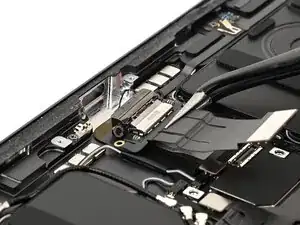
Follow this guide to replace the USB‑C charging port in an M4 iPad Pro 13".
Before you start this guide, try using a different cable and cleaning the port first.
You'll need replacement adhesive for both the port and screen to complete this repair.
Ferramentas


-
-
Disconnect all cables and accessories from the iPad.
-
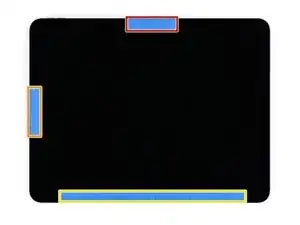
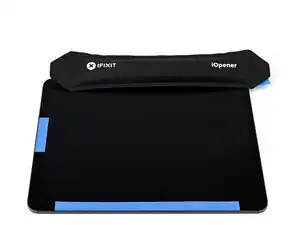
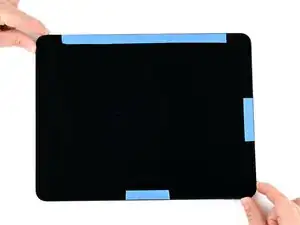
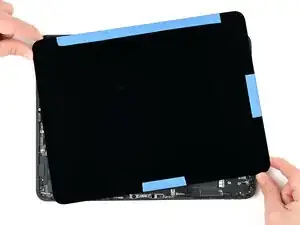
Place masking tape over the following areas of the display:
-
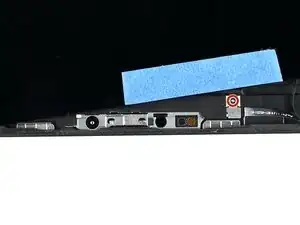
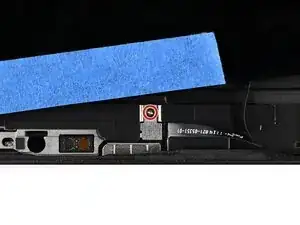
The TrueDepth camera near the middle of the top edge
-
The ambient light sensor near the middle of the left edge
-
The bottom edge, where there are delicate ribbon cables under edge of the display
-
If your screen is badly cracked, cover it with a layer of packing tape to help the suction cup stick and prevent shards of glass from coming off.
-
-
-
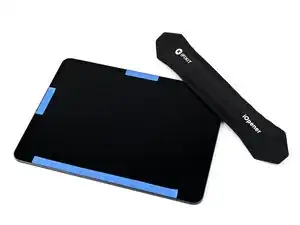
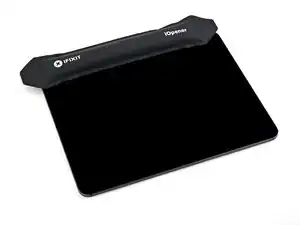
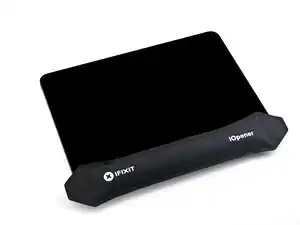
Apply a heated iOpener to the top-right corner of the screen for two minutes to soften the adhesive.
-
-
-
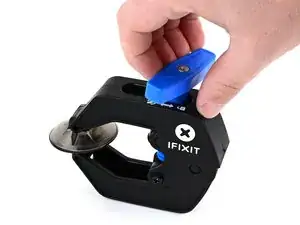
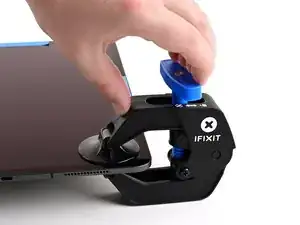
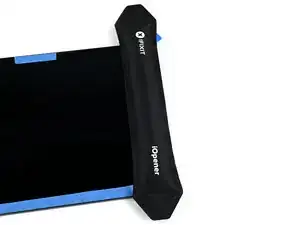
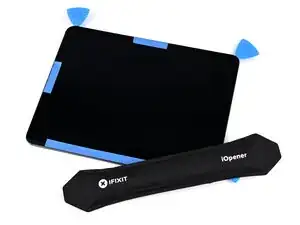
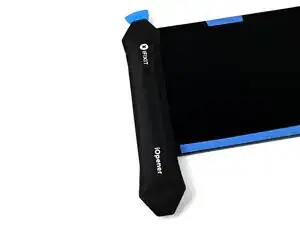
Unlock the Anti-Clamp by pulling the blue handle backwards, away from the suction cups.
-
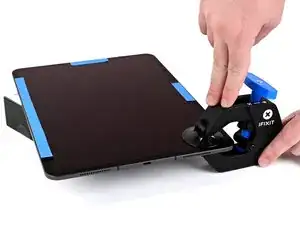
Place something under the bottom-left corner of the iPad to hold it level, then place the Anti-Clamp on your work surface and insert the top-right corner of the iPad between the Anti-Clamp's suction cups.
-
Hold the bottom of the Anti-Clamp and press down on the top arm to engage the suction cups.
-
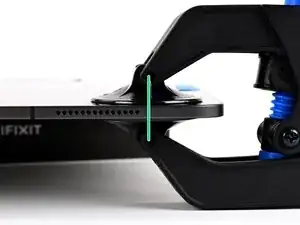
Make sure the top and bottom suction cups are aligned, and remain aligned for this entire procedure.
-
-
-
Pull the blue handle forward, towards the suction cups, to engage the twist mechanism.
-
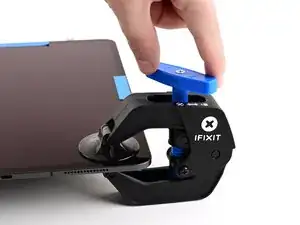
Turn the blue handle clockwise one full rotation or until the suction cups start to stretch.
-
-
-
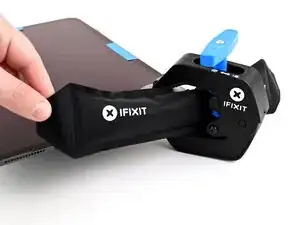
Wait at least one minute for the Anti-Clamp to pull the screen up until there's a small gap between the screen and the frame.
-
Make sure there's tension on the suction cups. Crank the handle just until you feel resistance, but don't crank too much or the suction cups will release.
-
Apply more heat while the Anti-Clamp is engaged. You can thread a heated iOpener through the Anti-Clamp or use a hair dryer or heat gun.
-
If the screen is still not releasing, crank the handle a half-turn and wait another minute while applying more heat periodically, still being careful not to overheat the iPad. Repeat as needed.
-
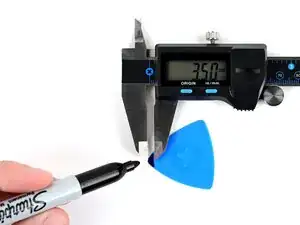
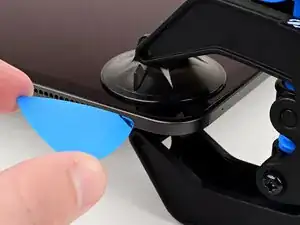
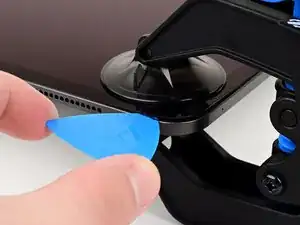
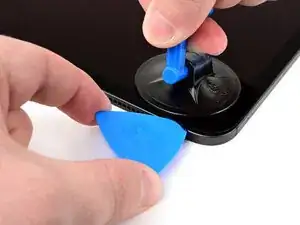
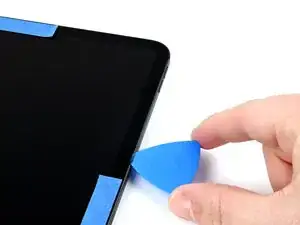
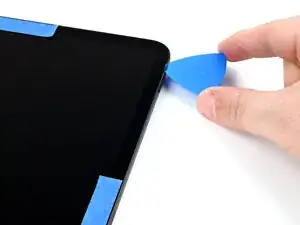
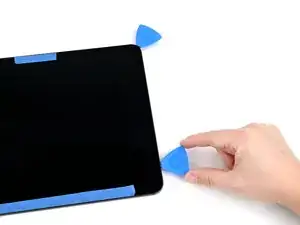
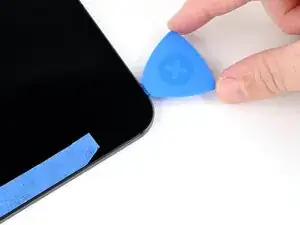
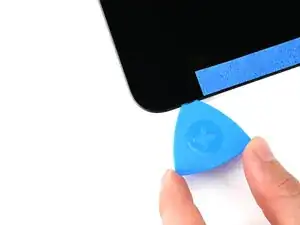
Once the screen lifts, insert a marked opening pick into the gap, no more than 3.5 mm deep.
-
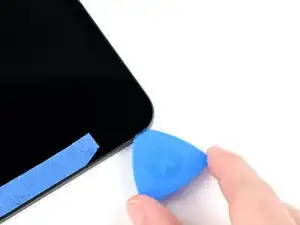
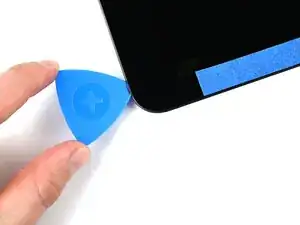
Slide the opening pick around the corner and leave it inserted.
-
-
-
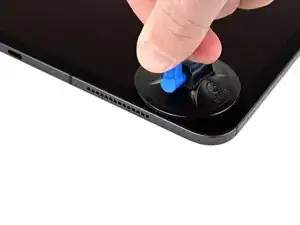
If you don't have an Anti‑Clamp, use a single suction handle instead.
-
Apply the suction handle near the top‑right corner with the open part of the handle facing away from the edge.
-
Hold the iPad down with one hand, away from the suction cup, and pull the suction handle up and towards the center of the iPad.
-
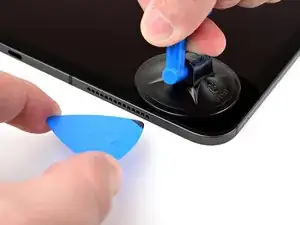
As soon as a small gap appears between the screen and the frame, insert a marked opening pick no more than 3.5 mm into the gap and release tension on the suction cup.
-
Slide the pick gently around the corner and leave it inserted.
-
-
-
Use an iOpener, hair dryer, or heat gun to soften the adhesive under the top edge of the screen.
-
-
-
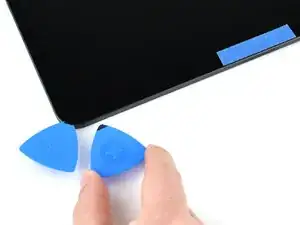
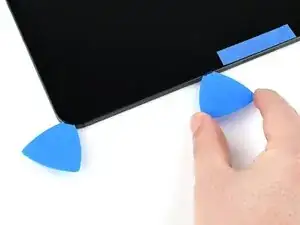
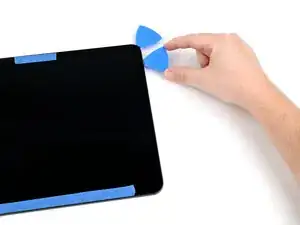
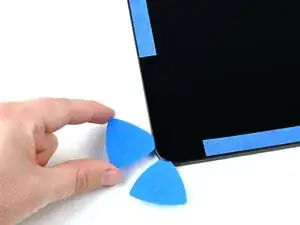
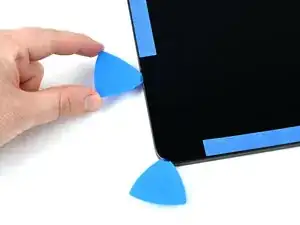
Insert an additional marked opening pick beside the first pick, on the top edge of the iPad, no more than 3.5 mm.
-
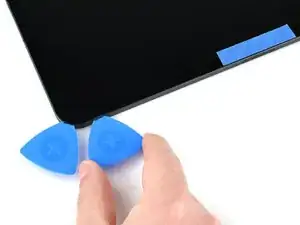
Slice the adhesive by slowly sliding the opening pick under the screen towards the front camera, stopping before you get to the masking tape.
-
-
-
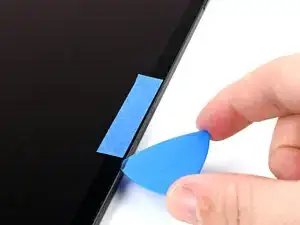
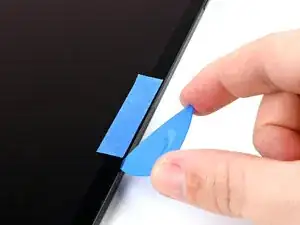
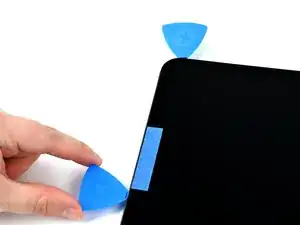
Lift the opening pick so it's at a sharp angle pointing into the iPad.
-
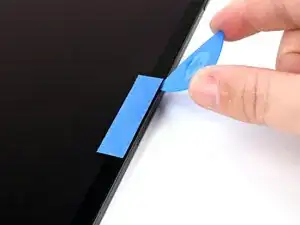
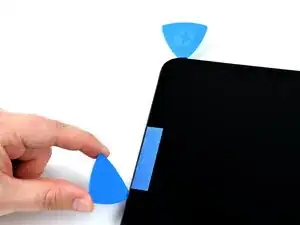
Slice the adhesive by sliding the pick under the taped section of the screen.
-
-
-
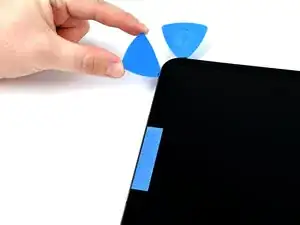
Finish slicing the adhesive by sliding the opening pick to the top-left corner.
-
Leave the opening pick inserted.
-
-
-
Heat the right edge of the iPad.
-
Insert an opening pick beside the first opening pick you inserted, on the right edge.
-
Working in small sections, slice the adhesive, applying more heat as needed.
-
-
-
Heat the bottom-right corner of the iPad.
-
Carefully slide the opening pick from the previous step around the bottom-right corner.
-
Leave the pick inserted.
-
-
-
Heat the bottom edge of the iPad, focusing on the right end.
-
Insert an opening pick beside the pick in the corner, on the bottom edge, no more than 3.5 mm deep.
-
Lift the pick so it enters the iPad at a sharp angle.
-
Carefully slide the pick under the screen across the bottom edge of the iPad.
-
-
-
Heat the bottom-left corner of the iPad.
-
Carefully slide the opening pick around the bottom-left corner.
-
Leave the pick inserted.
-
-
-
Heat the left edge of the iPad, focusing on the bottom end.
-
Insert an opening pick above the pick already inserted near the bottom-left corner.
-
Carefully slide the pick to the beginning of the masking tape.
-
-
-
Lift the pick so it enters the iPad at a sharp angle.
-
Slide the opening pick to the top-left corner.
-
If the screen is still adhered anywhere, use heat and an opening pick to slice the adhesive. Use opening picks to keep the screen lifted while you work.
-
-
-
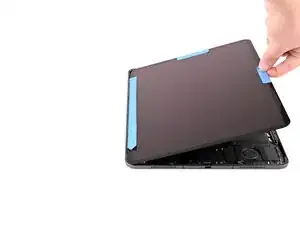
Once the screen is completely free of the adhesive, lift it about a half-inch and rotate it slightly counterclockwise so the screw next to the front camera is visible.
-
-
-
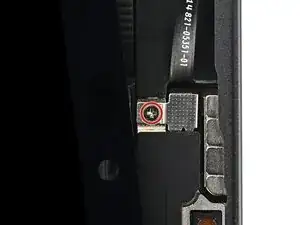
Use a JCIS or JIS 00 screwdriver to remove the 1.3 mm‑long screw securing the microphone connector cover.
-
Use tweezers or your fingers to remove the microphone connector cover. Be careful not to damage the foam on the back.
-
-
-
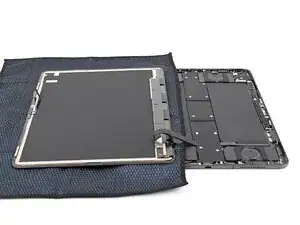
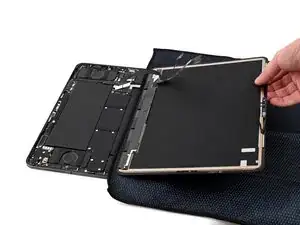
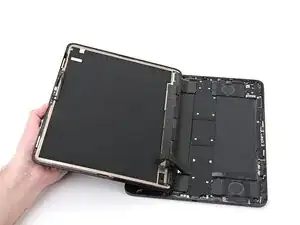
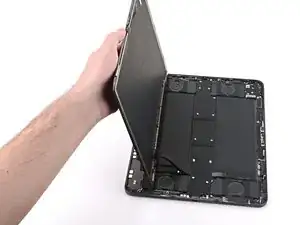
Open the iPad like a book from the top edge.
-
Hold the screen above the iPad body and place a soft cloth on top of the iPad to protect both the screen and the iPad body.
-
Place the screen face-down on the cloth, being careful not to strain the cables still attached to the iPad body.
-
-
-
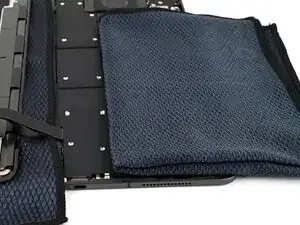
Place cloths over the batteries to protect them while you work.
-
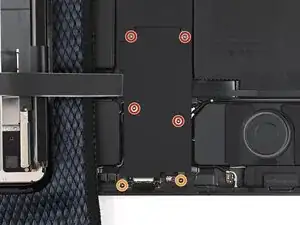
Use a JCIS or JIS 00 screwdriver to remove the screws securing the display connectors cover:
-
Four 2.1 mm‑long screws towards the center of the iPad
-
Two 1.6 mm‑long screws near the edge of the iPad
-
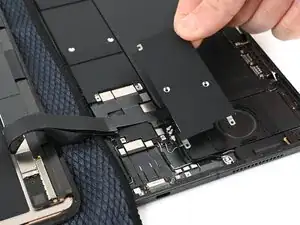
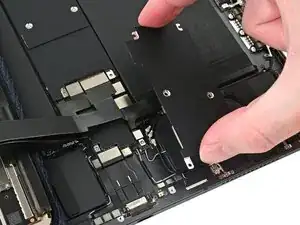
Use tweezers or your fingers to remove the display connectors cover.
-
-
-
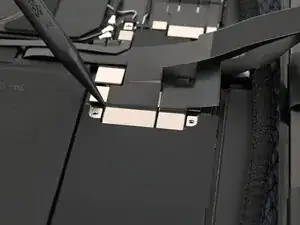
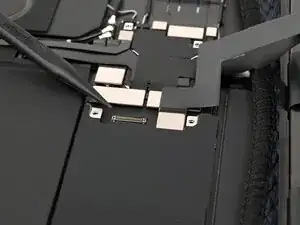
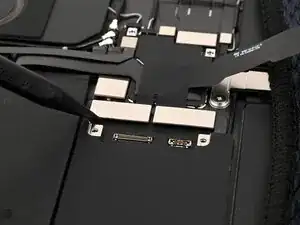
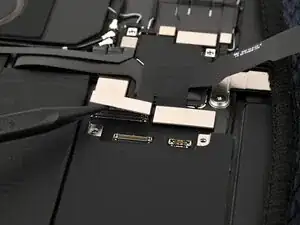
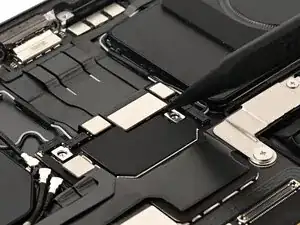
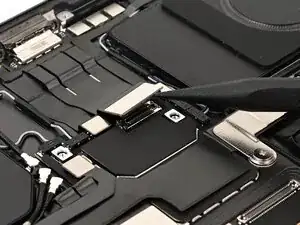
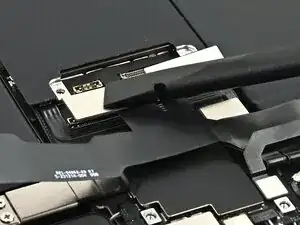
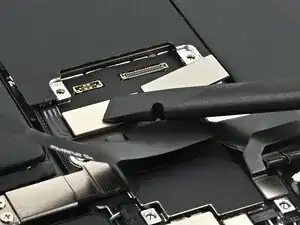
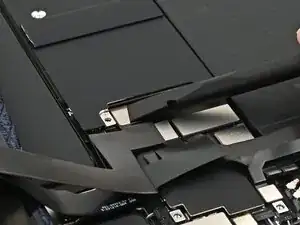
Use the tip of a spudger to pry up and disconnect the wide display cable press connector.
-
Then, use the tip of a spudger to pry up and disconnect the Multi‑Touch cable press connector.
-
-
-
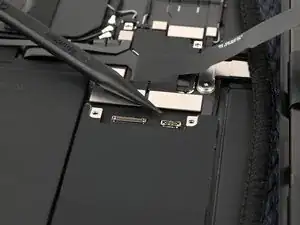
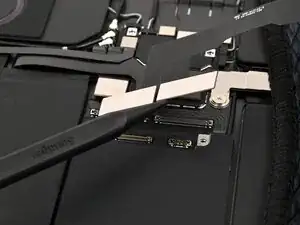
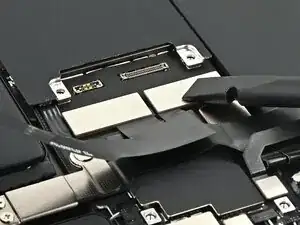
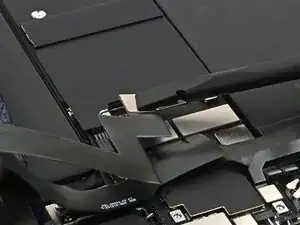
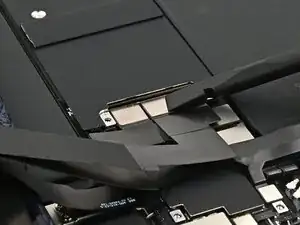
Use the tip of a spudger to pry up and disconnect both of the display power cable press connectors.
-
-
-
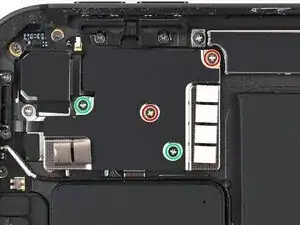
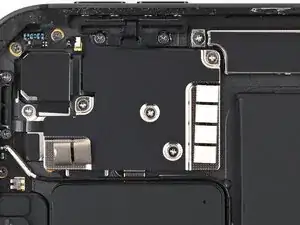
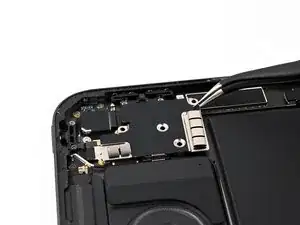
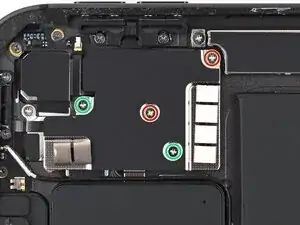
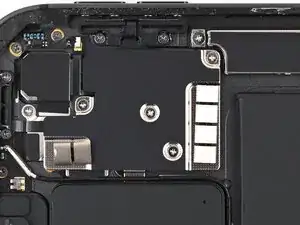
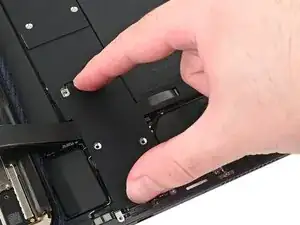
Use a JCIS or JIS 00 screwdriver to remove the four screws securing the rear camera cover:
-
Two 1.4 mm‑long screws, one near the center and one in the top-right corner
-
Two 1.6 mm‑long screws, one near the middle of the left edge and one near the bottom-right corner
-
-
-
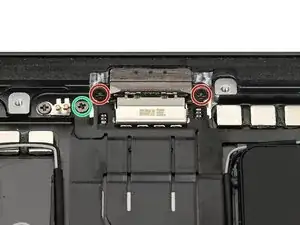
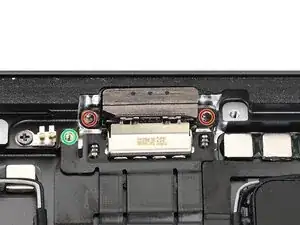
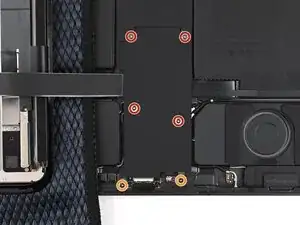
Use a JCIS or JIS 00 screwdriver to remove the three screws securing the USB-C charging port:
-
Two 2.0 mm‑long screws securing the port to the frame of the iPad
-
One 1.4 mm‑long screw securing the ribbon cable to the iPad
-
-
-
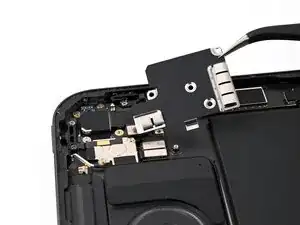
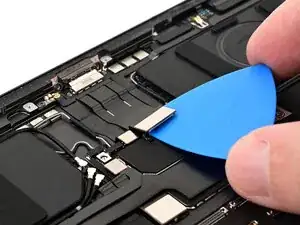
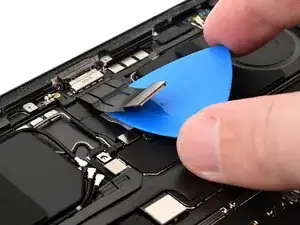
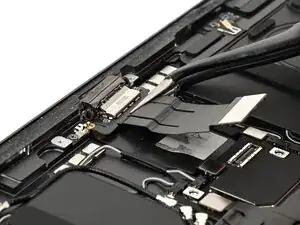
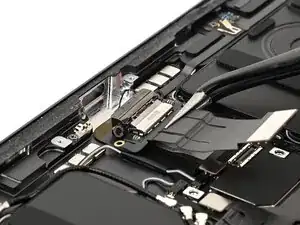
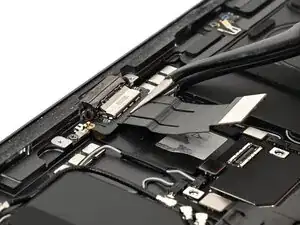
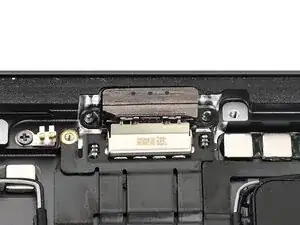
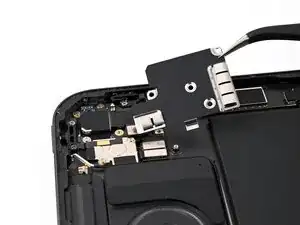
Use tweezers to pull the USB-C charging port away from frame, towards the center of the iPad, and remove it.
-
-
-
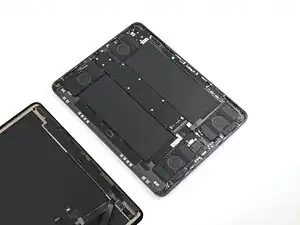
Congratulations on completing disassembly! The remaining steps will show how to reassemble the iPad.
-
-
-
If the replacement USB‑C port includes new adhesive, use high-concentration (>90%) isoporopyl alcohol and a lint-free cloth to clean the adhesive residue from the iPad frame.
-
-
-
If the new port has adhesive pre-applied, remove any liners. If the adhesive securing the port to the frame is not yet applied, remove one liner, apply it to the port, then remove the other liner.
-
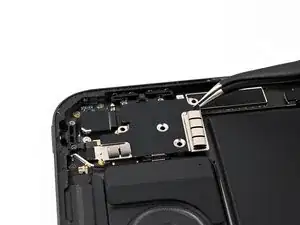
Place the USB-C charging port into its recess in the frame.
-
-
-
Use a JCIS or JIS 00 screwdriver to install the three screws securing the USB-C charging port:
-
Two 2.0 mm‑long screws securing the port to the frame of the iPad
-
One 1.4 mm‑long screw securing the ribbon cable to the iPad
-
-
-
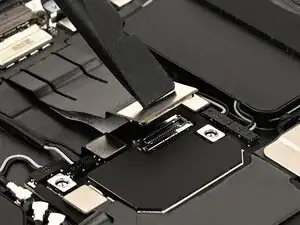
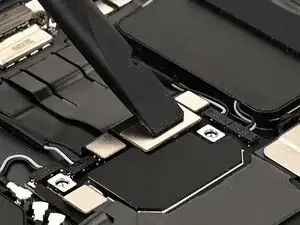
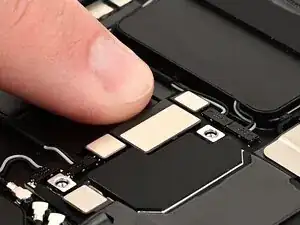
Use the flat end of a spudger or your finger to connect the USB-C charging port press connector.
-
Press the ribbon cable down for 10 seconds to make sure it's adhered to the iPad.
-
-
-
Use a JCIS or JIS 00 driver to install the four screws securing the rear camera cover:
-
Two 1.4 mm‑long screws, one near the center and one in the top-right corner
-
Two 1.6 mm‑long screws, one near the middle of the left edge and one near the bottom-right corner
-
-
-
Don't touch the ambient light sensor near the middle of the left edge or TrueDepth camera near the middle of the top edge while cleaning the frame.
-
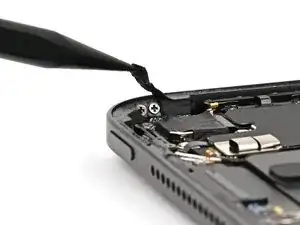
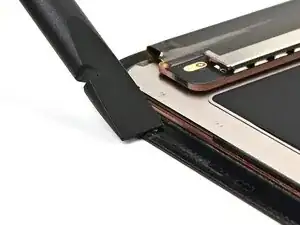
Use the tip of a spudger to lift a section of adhesive. Look for an edge or overhang where you can get underneath the adhesive strip.
-
-
-
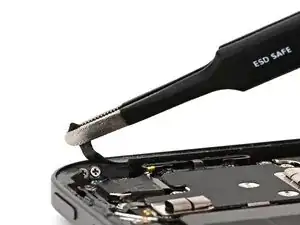
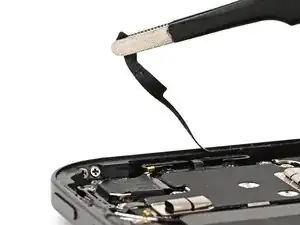
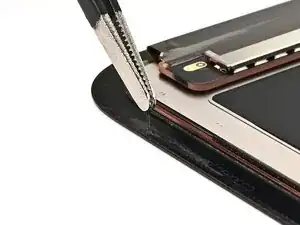
Use tweezers or your fingers to lift and remove the old screen adhesive. Apply a little heat to make the removal easier.
-
-
-
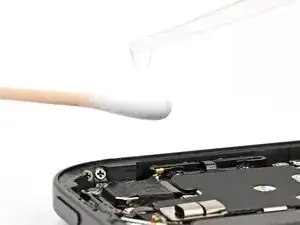
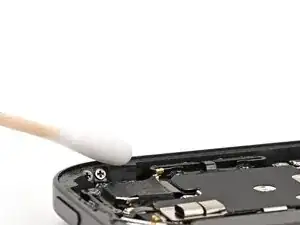
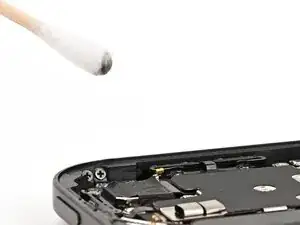
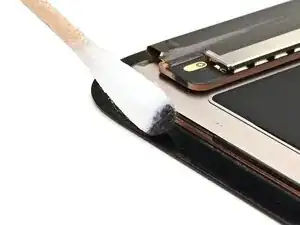
Apply a bit of isopropyl alcohol to a cotton swab or lint-free cloth and clean the frame until it's free of adhesive residue.
-
-
-
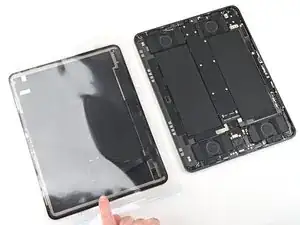
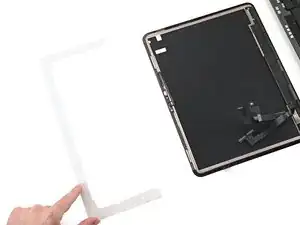
Align the adhesive with the frame of the iPad. It's easiest to align them above the USB‑C port.
-
-
-
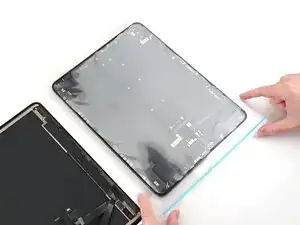
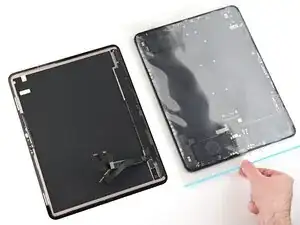
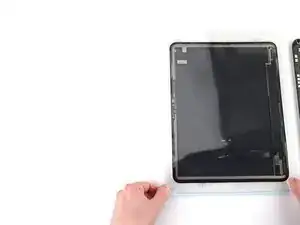
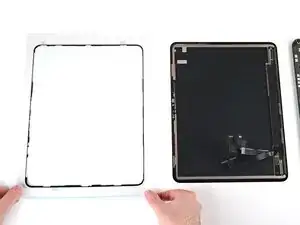
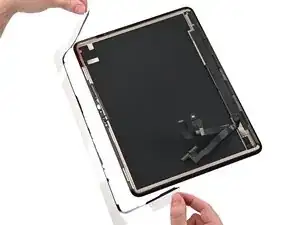
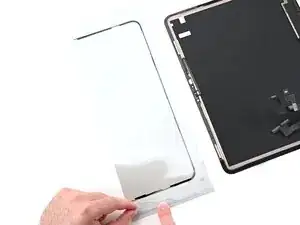
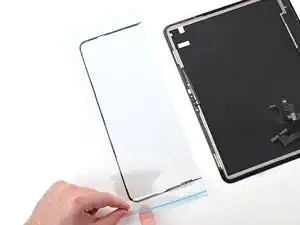
Lift the adhesive off the back of the screen and set it to the side. Keep it in the same orientation as the screen.
-
-
-
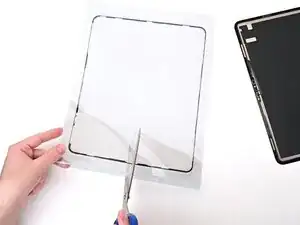
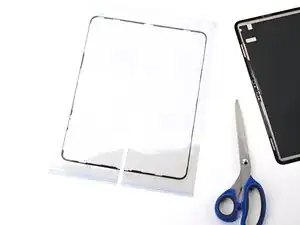
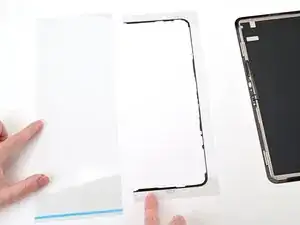
Use scissors to cut the adhesive vertically in half. Be careful not to crease or pull the adhesive itself.
-
-
-
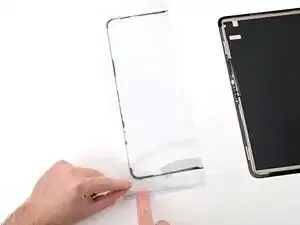
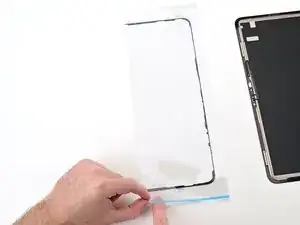
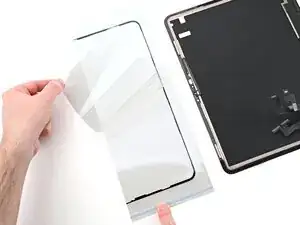
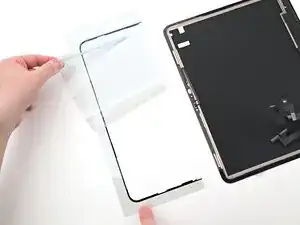
Flip the left adhesive over.
-
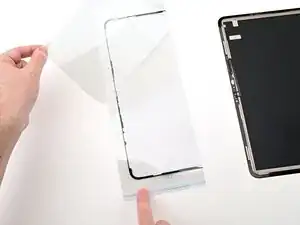
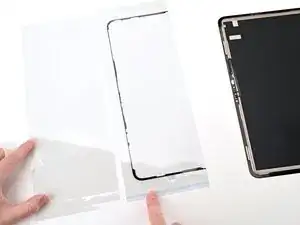
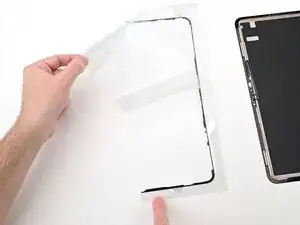
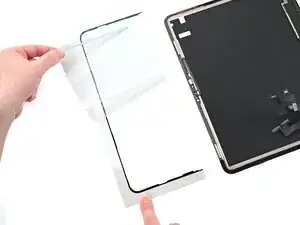
Peel the clear liner with the blue line off the back of the left adhesive. The adhesive is now exposed.
-
-
-
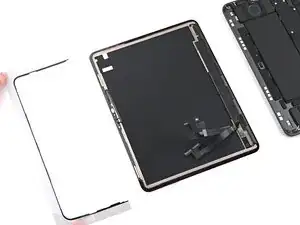
Flip the left adhesive and align it to the left edge of the display assembly.
-
Set the left adhesive in place aligned with the left edge of the screen.
-
Press the top and bottom sections of the left adhesive onto the back of the screen.
-
-
-
Peel and remove the topmost (clear) cling layer from the strip.
-
Peel and remove the bottom liner layer (clear with a blue line) from the strip.
-
-
-
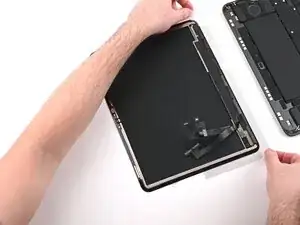
Flip the right adhesive and set it in place, aligned with the right edge of the screen.
-
Press the top and bottom sections of the right adhesive onto the back of the screen.
-
-
-
Use the flat end of a spudger to gently press all the adhesive into place around the entire perimeter of the iPad. Be careful not to press on the delicate ribbon cables across the bottom of the screen.
-
-
-
Place a clean cloth over the left battery cell in the iPad.
-
Set the screen on the iPad, so the screen cable connectors can reach their respective sockets in the iPad.
-
-
-
Align one of the display power cable press connectors over its socket on the logic board.
-
Press down with the flat end of a spudger or your fingertip—first on one of the short sides, then the other—until it clicks into place.
-
Repeat this process to connect the second display power cable press connector.
-
-
-
Set the display connectors cover onto the logic board so it's aligned with its screw holes.
-
-
-
Use a JCIS or JIS 00 screwdriver to install the six screws securing the display connectors cover:
-
Four 2.1 mm‑long screws towards the center of the iPad
-
Two 1.6 mm‑long screws near the edge of the iPad
-
-
-
Use tweezers or your fingers to remove the final, blue liners off the iPad screen adhesive.
-
-
-
Without touching the adhesive, slightly lift the iPad screen and remove the cloth between it and the iPad.
-
-
-
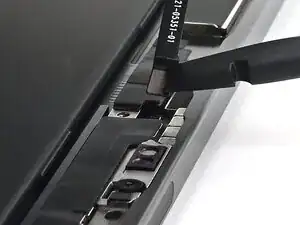
Hover the top of the screen over the microphone connector's socket on the board.
-
Use the flat end of a spudger or your finger to connect the microphone press connector to its socket on the board (located next to the front camera assembly).
-
-
-
Use tweezers to install the microphone connector cover into its slot beneath the front camera assembly bracket.
-
Set the cover down so it's aligned with its screw hole.
-
-
-
Use a JCIS or JIS 00 screwdriver to install the 1.3 mm‑long screw securing the microphone connector cover.
-
-
-
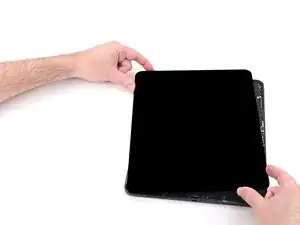
Carefully align the bottom edge of the screen with the bottom edge of the iPad.
-
Position the screen so it sits into the lip on the edge of the iPad.
-
-
-
Lower the screen into place, ensuring the screen's bottom edge stays flush with the bottom edge of the iPad.
-
-
-
Press down across the bottom edge, then across the entire perimeter of the screen so it sits flush.
-
-
-
To help the adhesive bond, apply heat to all four edges of the screen using an iOpener, hair dryer, or heat gun until it's hot to the touch.
-
-
-
Place the iPad screen-side-down on a soft, flat surface.
-
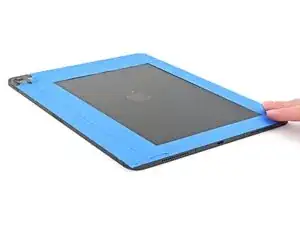
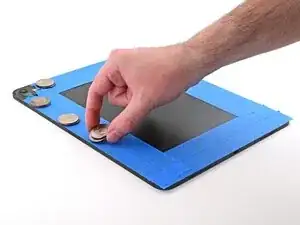
Apply tape to the back to protect its finish.
-
-
-
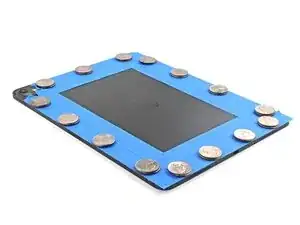
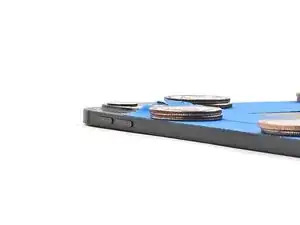
Place evenly spaced layers of coins or similarly thick objects on the tape along the edges of the back glass.
-
Stack them to a consistent height taller than the camera bump.
-
-
-
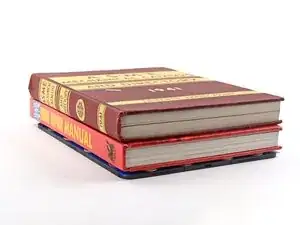
Stack multiple books or other heavy objects on the iPad.
-
Leave the objects in place for at least thirty minutes. The lighter the objects, the longer they should be left. Ideally, leave them stacked overnight.
-
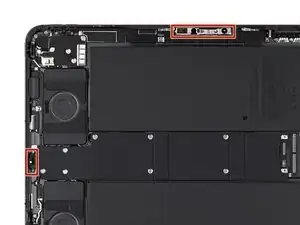
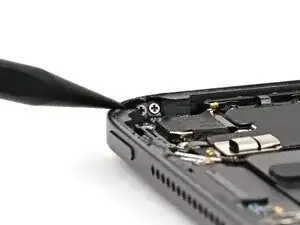
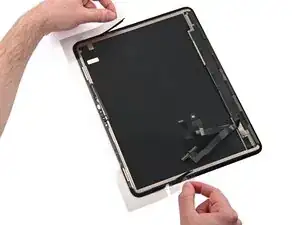
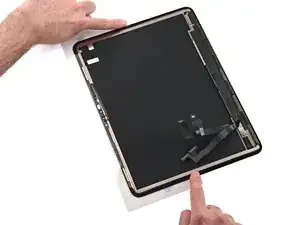
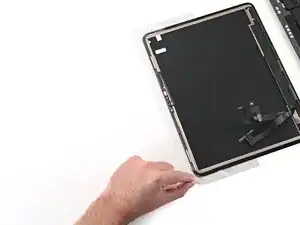
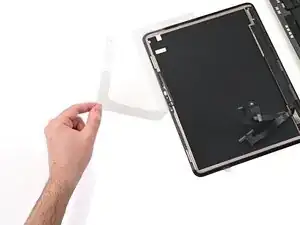

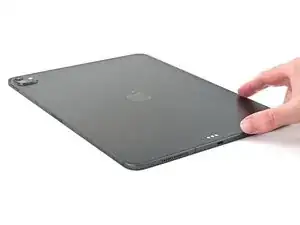
Take your e-waste to an R2 or e-Stewards certified recycler.
Repair didn’t go as planned? Try some basic troubleshooting, or ask our iPad Pro 13" Answers Community for help.