Introdução
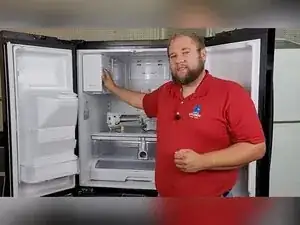
Use this guide to fix common Samsung “IceMaster” ice maker problems caused by moisture buildup and ice blockage that can prevent the ice box from sliding out or stop ice production. This procedure is based on the IceMaster style shown in the video; some tips may apply to other Samsung models, but many steps are specific to this design.
If the ice box won’t come out, run Forced Defrost (RD). If it still won’t release, manually defrost the ice box. If moisture and freezing return, seal air gaps in the ice box, install the updated fill tube/heater parts, verify the ice door flap seals, confirm the fill water line position, clean the condenser coils, and replace the control board if needed.
Warning: The video does not provide annotated diagrams or model-specific part numbers; use the refrigerator’s model number to match the correct Samsung ice maker kit and control board.


-
-
Compare the ice maker to the “IceMaster” style shown in the video because many of these steps are specific to that design.
-
-
-
Make sure the refrigerator is plugged in, and close the doors.
-
Press and hold the upper-left button and the middle-right button on the display for eight seconds to enter the forced defrost option mode.
-
Cycle to the right about three times until RD mode is selected.
-
Leave the refrigerator running while it beeps periodically to indicate it is defrosting.
-
-
-
Press and hold the same two buttons for eight seconds to leave forced defrost options.
-
When the display returns, press the middle-right button twice until the screen is blank, and wait eight seconds.
-
Confirm the refrigerator returns to normal operating mode.
-
-
-
If RD mode runs for 30 minutes and the ice box still won’t come out, run defrost for another 30 minutes or manually defrost the ice box.
-
-
-
Use a steam gun to defrost the ice box because it stays around 200 degrees and won’t warp the liner.
-
Aim the steam under the ice box, pull the trigger, and hold it when there is plenty of steam.
-
Keep steaming until the ice buildup breaks free and clears the area that prevents the ice maker from running.
-
-
-
Use a screwdriver to remove the screw that holds the wire harness to the ice maker and the auger behind it.
-
Disconnect the ice maker wire harness connector.
-
Use a screwdriver to remove the screw from the ice maker air tunnel.
-
Use a flat-blade screwdriver to push the plastic to the right to release the air tunnel from its retainer.
-
-
-
Pull the looping metal bar down to expose clearance because it is the refrigerant loop in the ice maker.
-
Angle the refrigerant loop to about 20 degrees so the ice maker can come out.
-
Press the retaining tab at the front top of the ice maker, pull the ice maker toward the front, and pull it down and out.
-
Coax the ice maker out while adjusting the refrigerant loop as needed.
-
-
-
Disconnect the auger wire harness connector.
-
Press the auger release tab at the bottom of the auger assembly.
-
Pull the auger assembly out while keeping the release tab pressed, using fingers to pull rather than prying with a tool.
-
-
-
Apply food-grade RTV silicone sealant into the widest cracks in the ice box cabinet, focusing toward the rear.
-
Use a trimmed popsicle stick to smooth the sealant and push it deeper into the cracks.
-
Keep sealant from sticking out where it could rub against the auger during reinstallation.
-
-
-
Remove and fully separate the styrofoam piece that holds the tube in place using a flat-blade screwdriver to release it from its retaining tab.
-
Disconnect the harness at the rear of the auger that holds the heater wire in place, and remove the heater tube.
-
-
-
Reinstall the missing screw into the mounting bracket to secure the revised fill tube heater.
-
Thread the factory-spec cable tie through the small slot, and tighten it around the fill tube to hold it in place.
-
-
-
Shine a powerful light into the rubber ice door opening, and check the other side for any light leaking through the flap.
-
Inspect for mineral buildup that can hold the flap open or for tears and damage in the flap assembly.
-
Remove the dispenser panel by unscrewing the single screw to the right of the dispenser if you need to inspect the flap directly.
-
-
-
Use needle-nose pliers to pull the edge of the plastic ice maker retaining piece out of the styrofoam.
-
Press the replacement retainer into position because warped retainers can contribute to moisture buildup over time.
-
Install the Y clips at the rear of the cabinet, making sure the tips point straight down.
-
-
-
Use an inspection mirror to check the plastic water line inside the black fill tube.
-
Confirm the water line isn’t too far out or too far into the tube.
-
Adjust the line at the rear of the refrigerator if you can’t see the water line or if it is pressed too far against the fill tube.
-
Loosen the plastic retainers and the tape holding the water lines, push or pull the lines to reposition them, and secure the retainers and tape again.
-
-
-
Remove the screws holding the lower rear metal panel, and pull the panel off to access the condenser coils.
-
Scrub the coils with a condenser coil brush to remove dirt buildup.
-
Clean the metal plate you removed, and clean other dirty areas such as the condenser fan.
-
-
-
Use a screwdriver to remove the four screws around the metal plate on the left side of the back of the refrigerator to open the control housing.
-
Take a picture of the board and wiring for reference, or move each harness one-by-one from the old board to the new board.
-
Press down extremely hard on the bottom retention piece to release the old board, using pliers if needed.
-
Seat the new board under the two small top retention tabs and behind the bottom depressible tab, and keep the large harness inside the hidden tabs so it won’t stick out.
-
Reinstall the rear metal covers, plug the refrigerator in, and confirm the board boots with no obvious changes.
-
-
-
Check the refrigerator’s leveling legs and set a slight incline so water drains toward the back and into the drain tubes.
-
Use slip-jaw pliers to adjust the leveling legs as needed.
-
-
-
Slide the auger assembly slowly into the cabinet so it can press against the RTV sealant without smearing it.
-
Keep the bottom plastic tab depressed during insertion so it doesn’t rub on the bottom of the ice maker cabinet.
-
Push the auger extremely far back until the retention tab clicks into its hole.
-
-
-
Slot the top of the ice maker into the black catch, and angle the ice maker into place.
-
Bend the refrigerant loop to a slight angle to fit the ice maker, and bend it upward so the ice maker catches onto the black piece.
-
Press the ice maker back about two to three inches to lock it into position.
-
Gently work the refrigerant loop back up into the top of the ice maker housing.
-
Push the air tunnel back up and lock it onto the small plastic ledge, using a flat-blade screwdriver if needed.
-
Fit the cover tabs into place, reinstall the cover screw, and reinstall the air tunnel screw.
-
If moisture and freezing return, re-check the sealed air gaps, the ice door flap seal (light test), the fill water line position (mirror check), and the condenser coil cleanliness. The video notes Samsung ice maker kits are model specific and that Samsung may provide official kits to some owners, so contact Samsung if you want to check eligibility. Warning: The video does not include diagrams or a model-by-model parts list, so you must match parts by the refrigerator model number.