Introdução

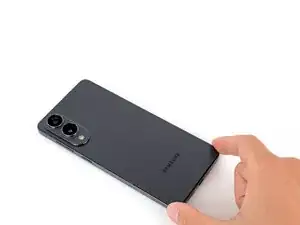
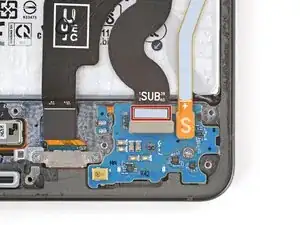
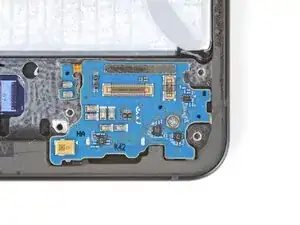
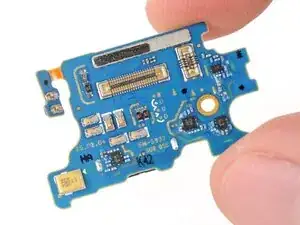
Follow this guide to replace the sub board (aka SIM board or daughterboard) in your Samsung Galaxy S25 Edge smartphone.

If your phone doesn't detect the SIM card or the SIM card tray won't insert properly, you may need to replace the sub board.

Note: While removing the USB‑C port and interconnect cables isn't strictly necessary (you can just disconnect them from the sub board), it reduces the risk of damaging the cables when removing the board.

You'll need replacement back cover adhesive to complete this repair.

  1. gRrGFHOvnCPGSi14
    gRrGFHOvnCPGSi14
    SIJAOaG1JcTRhyaM
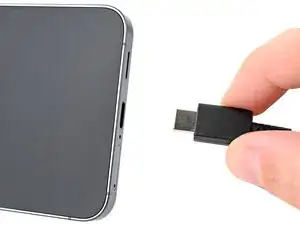
    • Let your phone's battery drain below 25% before starting this repair. A charged lithium-ion battery may catch fire if accidentally damaged.

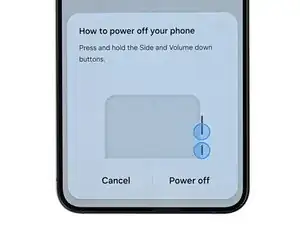
    • Completely power off your phone and unplug all cables.

  2. cqlgSe1cmrAoT3Bx
    cqlgSe1cmrAoT3Bx
    vd5fF2lmXZjNCRuL
    OOMhGy3GMtq6YSuN
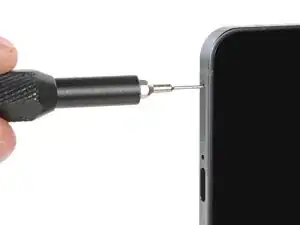
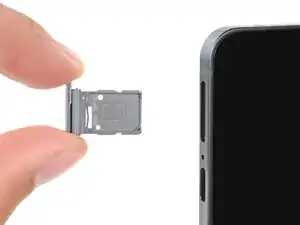
    • Insert a SIM eject tool, SIM eject bit, or straightened paperclip into the SIM card tray hole on the bottom edge of your phone.

    • A small mic hole is next to the SIM tray—don't confuse the two!

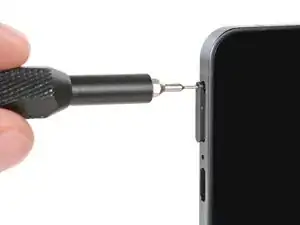
    • Firmly press the SIM eject tool into the hole to eject the SIM card tray.

    • Remove the SIM card tray.

    • When reinserting the tray, make sure the hole is on the left side before firmly pushing the tray into place.

  3. AUKgucWQgIw6abYc
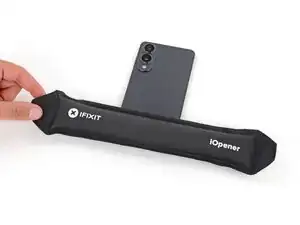
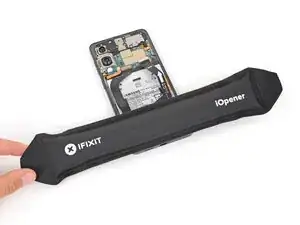
    • Mild adhesive secures the back cover. Heating it will soften the adhesive, making it easier to separate.

    • Heat an iOpener and lay it on the bottom edge of the back cover for two minutes to soften the adhesive.

    • Alternatively, you can use a hair dryer, heat gun, or hot plate to heat the cover.

  4. MKZYaKnSqRMOttaV
    MKZYaKnSqRMOttaV
    DYNBmtI5KIlNMVyp
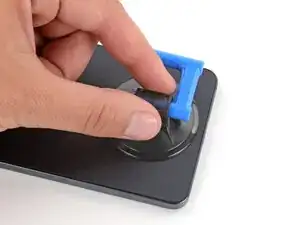
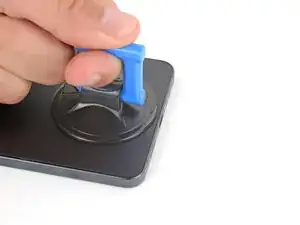
    • Apply a suction handle near the center of the back cover's bottom edge, as close to the edge as possible.

  5. cNHreUvGGgTdMHso
    cNHreUvGGgTdMHso
    FalHG4ZWwBWcXaZ2
    ML4qOdvgkFqeepJZ
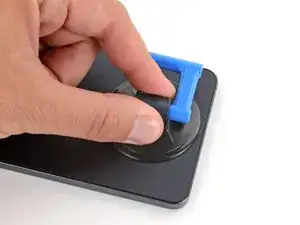
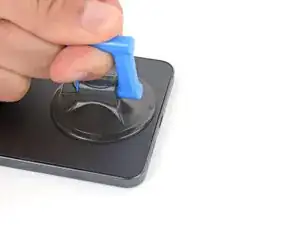
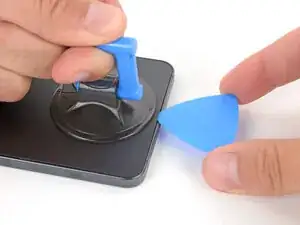
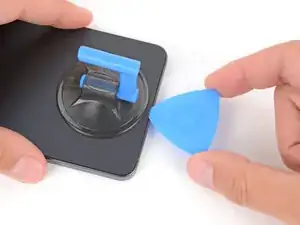
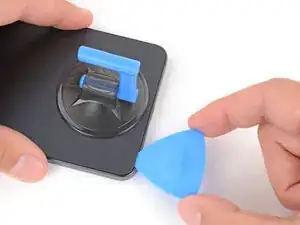
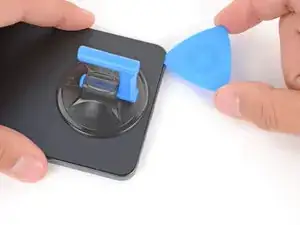
    • Pull up on the suction handle with strong, steady force until a gap forms between the cover and frame.

    • Insert the tip of an opening pick into the gap.

  6. pydYLtDqUDE4YDRh
    pydYLtDqUDE4YDRh
    fFkYJ4iEjMtEbSXb
    kuNsiooXAiThndsn
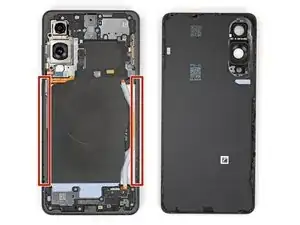
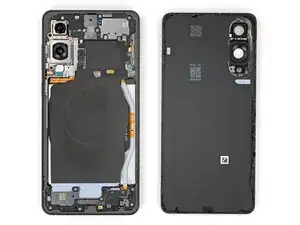
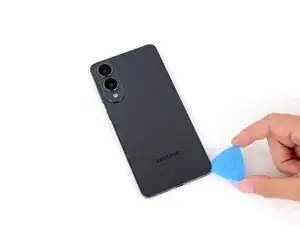
    • The back cover is secured with adhesive around the perimeter of the frame. Use this picture as a reference while you separate the adhesive.

    • When separating the left and right edge adhesive, don't insert your pick more than 3 mm to avoid damaging the wireless charging coil and interconnect cable.

  7. CMsiBVBI5kwUqXOW
    CMsiBVBI5kwUqXOW
    VaLGN3iKlVVhUCTk
    e4nGGwSexGxYRagn
    • If you have trouble separating the adhesive, apply more heat and try again.

    • Slide your opening pick along the bottom edge to separate the adhesive securing the back cover.

  8. MQxHqTLKpfOwLQHC
    MQxHqTLKpfOwLQHC
    HMS5xDmgPWIZRwFn
    D2ndMNVjVM6vdnfd
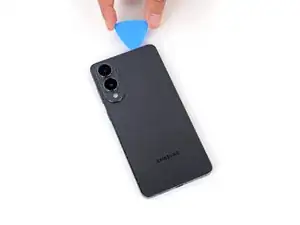
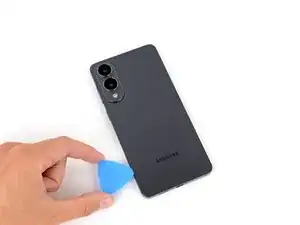
    • Continue sliding your pick around the entire perimeter of the back cover to separate all the remaining adhesive.

    • Remember not to insert your pick too far under the long left and right edges.

  9. cCmWGpNnHEs2Rds1
    cCmWGpNnHEs2Rds1
    EkOvtCDKRdXTSqrj
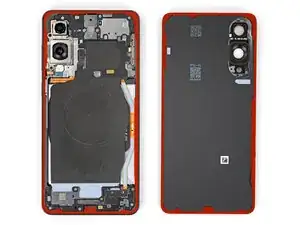
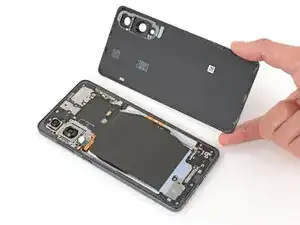
    • Remove the back cover.

    • If you're having trouble, check the perimeter for any remaining adhesive and use your opening pick to separate it.

    • During reassembly:

    • This is a good point to power on your phone and test all functions before sealing it up. Be sure to power your phone back down completely before you continue working.

    • Check your rear cameras for any smudges and gently wipe them with a clean lint–free cloth if necessary.

    • Your replacement back cover adhesive will be applied to either the frame or the back cover. Use cutouts and contours to see where it lines up best. If it matches the back cover, follow this guide. If it matches the frame, use this guide.

  10. 1fRv1fV12gvcDQbb
    1fRv1fV12gvcDQbb
    WGwxhlnuWIRjQlWO
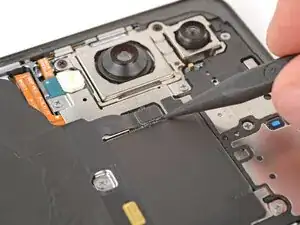
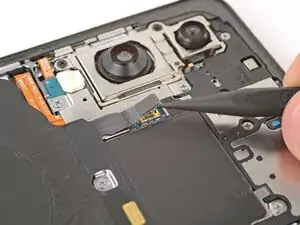
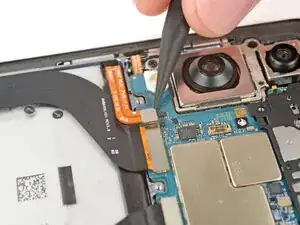
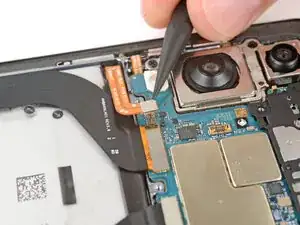
    • Use the point of a spudger to pry up and disconnect the wireless charging assembly press connector from its top edge.

    • Getting the spudger under the connector can be tricky. If you're having trouble, try using the tip of an opening pick instead.

  11. ZZ1TYFCZd2h4SEZc
    ZZ1TYFCZd2h4SEZc
    JuGasFR5i21jcCYp
    BCZUXmlCiDnQFVlJ
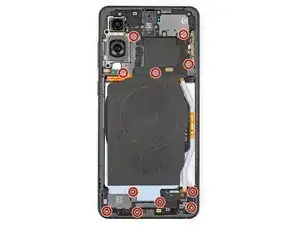
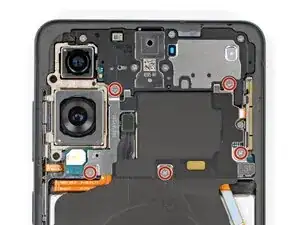
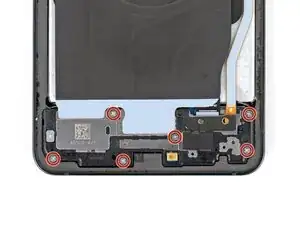
    • Throughout this repair, keep track of each screw and make sure it goes back exactly where it came from.

    • Use a Phillips screwdriver to remove the eleven 2.8 mm‑long screws securing the wireless charging and loudspeaker assembly.

  12. rIxbjnIn2FM1BFZs
    rIxbjnIn2FM1BFZs
    3MbR2OPK56ovnDDG
    YZwsHeR1ZBXyLiDo
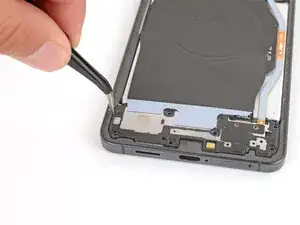
    • The wireless charging coil is connected to the loudspeaker with delicate tape. It's easiest to remove the coil and loudspeaker together as one assembly to avoid damage.

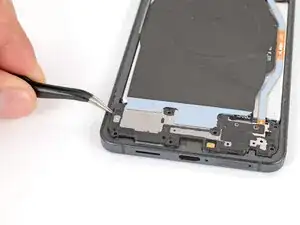
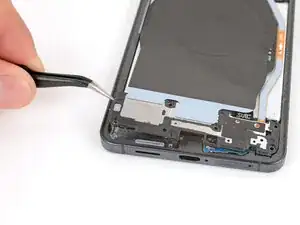
    • Use angled tweezers to pry up and unclip the loudspeaker by the notch on its left edge.

    • During reassembly, press down firmly around the perimeter of the loudspeaker to engage its clips.

  13. D1kANNWXUXwMu6XG
    D1kANNWXUXwMu6XG
    koJQCO1JHnoDu2me
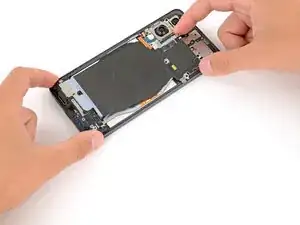
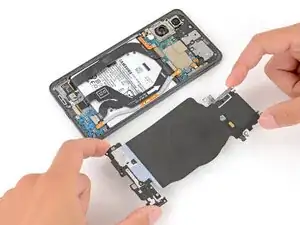
    • Use two hands to lift and remove the wireless charging and loudspeaker assembly.

  14. LWh51vKjKZUN2viw
    LWh51vKjKZUN2viw
    MTSMykZjgmxSLPtU
    • Every press connector has a corresponding gold arrow on the board that shows the proper location to pry—nifty! Prying at the wrong location risks damaging the fragile surface‑mounted components on the board.

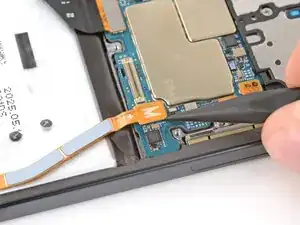
    • Use the point of a spudger to pry up and disconnect the battery press connector.

  15. SZpdQqFsmrUp1ahc
    SZpdQqFsmrUp1ahc
    TaeZPx3mOqST2iAX
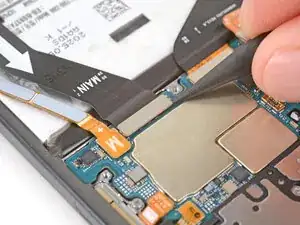
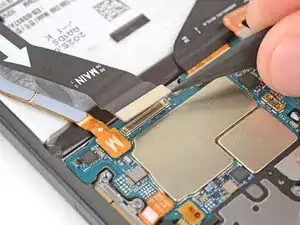
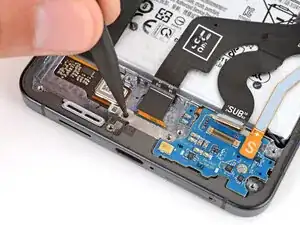
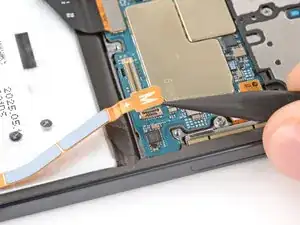
    • Use the point of a spudger to pry up and disconnect the USB‑C port cable's press connector (marked MAIN) from the logic board.

  16. 3sqqiJmIxSSPOBCS
    3sqqiJmIxSSPOBCS
    BAkLLBwmfOdeJ1MQ
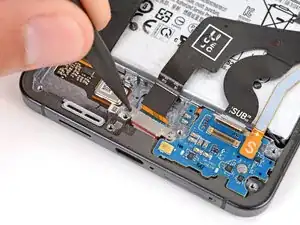
    • Use the point of a spudger to pry up and disconnect the USB‑C port cable's press connector (marked SUB) from the sub board.

  17. mvnBIl1WAprBKd5C
    mvnBIl1WAprBKd5C
    gku6PbiT22qM2Cmo
    • Use a Phillips screwdriver to remove the two 2.3 mm‑long screws securing the USB‑C port.

  18. FR2NlxGFkO5Y4VEC
    FR2NlxGFkO5Y4VEC
    te23JZOhBYvgsswE
    • Mild adhesive secures the USB‑C port cable to the sub board, near the white section below the SUB text.

    • Apply a heated iOpener to the USB‑C port cable for two minutes to soften the adhesive.

    • Alternatively, you can use a hair dryer or heat gun to lightly heat the cable.

  19. CHEDrJFFh3SoEVoe
    CHEDrJFFh3SoEVoe
    XIBkVvvaAhEuJhGM
    • Be careful not to crease or tear the USB‑C port cable during this step.

    • Use your fingers to gently peel up the USB‑C port cable from the sub board.

  20. Ultfk6XeDReo2pnH
    Ultfk6XeDReo2pnH
    XvEhhMNRt6BaMkWf
    fDUUtkeiBHNx1qgr
    • Insert the point of a spudger into one of the USB‑C port screw holes and push the port away from the bottom edge of your phone.

    • Alternate between screw holes as necessary until the port slides fully out of its recess.

  21. fIpMxlM6oaTyYtVN
    • Grip the USB‑C port by its cable and remove it.

  22. livImPUDldQDZoal
    livImPUDldQDZoal
    oOaBPNimXpAgt2BZ
    • Use the point of a spudger to pry up and disconnect the interconnect cable press connector (marked M) from the logic board.

  23. lXYr6UBSKYtqifp1
    lXYr6UBSKYtqifp1
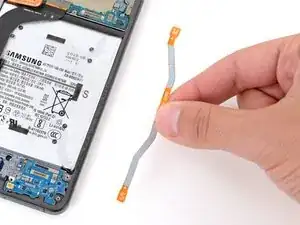
    fFIMNDEhUSZKResY
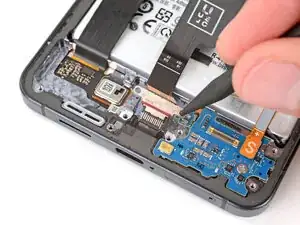
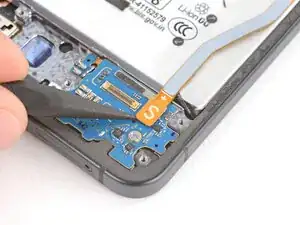
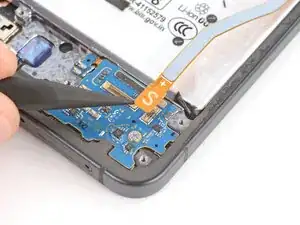
    • Use the point of a spudger to pry up and disconnect the interconnect cable press connector (marked S) from the sub board.

  24. CA5X36iApivDIFMY
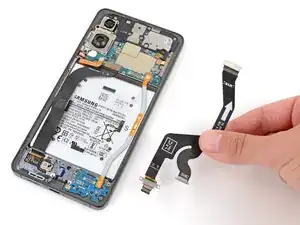
    • Remove the interconnect cable.

  25. srb4JUWyVAFwRbNF
    srb4JUWyVAFwRbNF
    qrG4AWeeWRgLtpmB
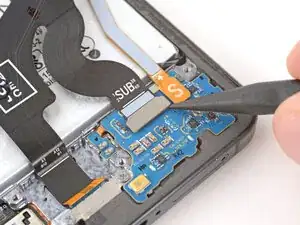
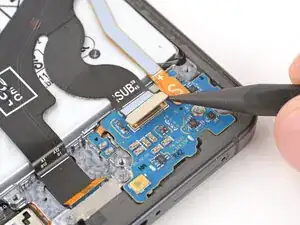
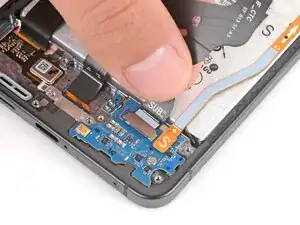
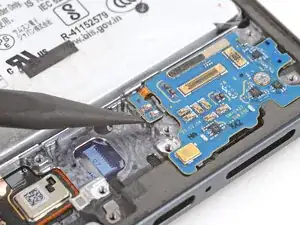
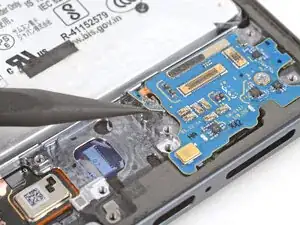
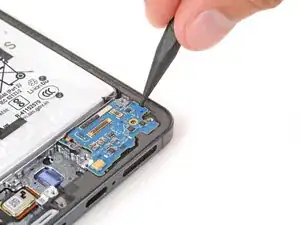
    • Use the point of a spudger to gently pry up the small extension board near the top left corner of the sub board.

    • If you're having trouble, lightly heat the board with an iOpener, hair dryer, or heat gun. Alternatively, you can apply one drop of high‑concentration (>90%) isopropyl alcohol under the board to soften its adhesive.

  26. 23JPWm6rvqHXUNCp
    23JPWm6rvqHXUNCp
    Ds6PcvUXaguJaXCb
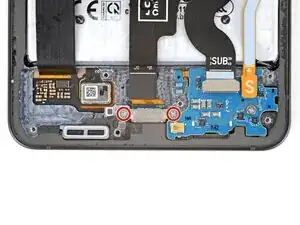
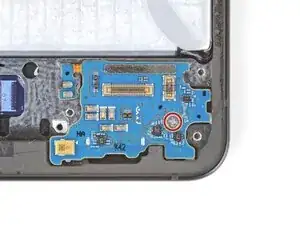
    • Use a Phillips screwdriver to remove the 2.3 mm‑long screw securing the sub board.

  27. PXWpiM54v6kLWk2p
    PXWpiM54v6kLWk2p
    li2RDSnEVNJhXhJt
    WmoIV6tpKDilQbYI
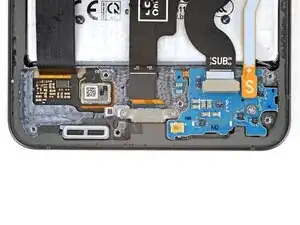
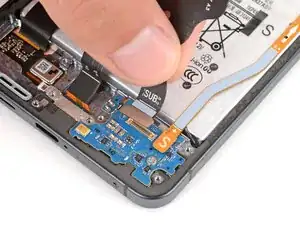
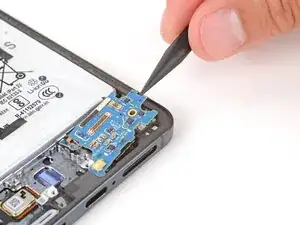
    • Before trying to pry up the sub board, make sure you removed the SIM card tray.

    • Use the point of a spudger to pry up and unclip the sub board by the notch on its right edge.

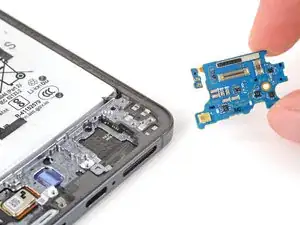
    • Grip the board by its edges and remove it.

Conclusão

Compare your new replacement part to the original part—you may need to transfer remaining components or remove adhesive backings from the new part before you install it.

To reassemble your device, follow these instructions in reverse order.

Take your e-waste to an R2 or e-Stewards certified recycler.

Repair didn’t go as planned? Try some basic troubleshooting, or ask our Answers Community for troubleshooting help.

Spencer Day

Membro desde: 14/09/22

165254 Reputação

0 comentários