Introdução
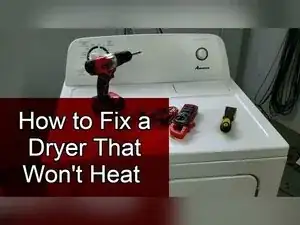
If a Kenmore electric dryer runs but doesn’t heat, the cause is often loss of 240 V power to the dryer or a failed safety device in the heating circuit. This guide walks you through confirming the dryer style, checking the supply voltage with a multimeter, opening the cabinet, and testing the main heating components so you can identify what needs to be replaced.
Ferramentas


Peças
-
-
Check whether the dryer has a lint screen housing at the top of the cabinet near the door opening.
-
-
-
Gather a 6-in-1 screwdriver with 1/4 inch and 5/16 inch nut drivers, a multimeter, and a putty knife.
-
-
-
Remove the small terminal block cover on the back of the dryer to expose the power cord connections.
-
-
-
Measure from the first hot leg to neutral and confirm about 120 V.
-
Measure from the second hot leg to neutral and confirm about 120 V.
-
Measure between the two hot legs and confirm about 240 V.
-
Reset the breaker fully by switching it off and back on if voltage is missing on either leg.
-
-
-
Use a nut driver to remove about eight screws securing the back panel.
-
Lift the back panel off to expose the heating system and its sensors.
-
-
-
Locate the heating element housing and the thermostats and fuses attached to the heating system.
-
-
-
Set the multimeter to continuity mode or to resistance if your meter doesn’t have a continuity buzzer.
-
Pull at least one spade connector off the component being tested.
-
-
-
Remove the spade connectors from the heating element terminals.
-
Check the heating element terminals for continuity.
-
Switch to resistance and confirm the element reads about 10 ohms, which may take a few seconds to stabilize on the meter.
-
-
-
Place one probe on a heating element spade terminal and place the other probe on the metal heater housing.
-
-
-
Test the two cycling thermostat terminals with the red wires for continuity because they control the primary heat function.
-
Test the two cycling thermostat terminals with the purple wires using resistance because they control delicate or lower heat settings.
-
-
-
Test the high limit cutoff, sometimes called the thermal fuse, for continuity.
-
Inspect the blower housing and the vent pipe for excessive lint and clean them to prevent overheating and repeat failures.
-
-
-
Insert a putty knife into the seam between the top and the chassis at the far left side and push in hard to release the spring clip.
-
Release the spring clip on the far right side, then roll the top forward to lift the console for easier timer access.
-
Disconnect the left harness and leave the right harness in place.
-
Set the timer to a high heat setting and check the three specified timer contacts for continuity.
-
-
-
Reinstall the console and the rear panel, then restore power and run a timed high heat cycle to confirm the dryer heats.
-
No-heat problems are often electrical supply issues, a blown high limit cutoff, or a failed heating element. After any repair, clean lint from the airflow path and make sure the vent to the outside is clear to prevent overheating and repeat failures.