Introdução
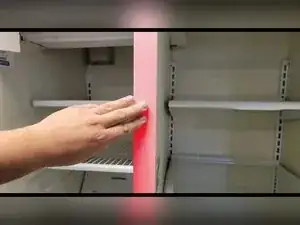
If a refrigerator door is getting super hot, it’s usually not a bad door, it’s the refrigerator struggling to get rid of heat. This guide walks through five common fixes that restore normal airflow and cooling, with a focus on Whirlpool side-by-side refrigerators (other models may place panels, vents, fans, and coils in different locations).
Ferramentas


Peças
-
-
Unplug the refrigerator from the wall outlet.
-
Pull the refrigerator away from the wall far enough to access the lower rear panel and the floor area underneath.
-
-
-
Locate the lower rear access panel, which may be cardboard or metal depending on the model.
-
Use a nut driver or hex-head screwdriver to remove the screws securing the panel.
-
Remove the panel and set it aside.
-
-
-
Find the air intake or vent holes in the rear panel area, which may be near the water valve on some models.
-
Remove dirt, debris, or pet hair from the holes so airflow isn’t blocked.
-
Clean dirt and debris off the removed rear panel before reinstalling it later.
-
-
-
Inspect the area behind the rear panel for the compressor, the condenser fan, and any visible condenser coils.
-
-
-
Plug the refrigerator in briefly and check whether the condenser fan runs during normal operation.
-
Unplug the refrigerator again and make sure the fan blade area is clean and the blade spins freely.
-
Replace the condenser fan if it isn’t running or if it’s making abnormal noise that suggests it’s failing.
-
-
-
Vacuum dust and dirt from the bottom rear cabinet area to improve airflow through the condenser compartment.
-
-
-
Check whether the condenser coils are on the rear of the refrigerator or located underneath near the front or middle.
-
-
-
Remove the lower front access panel to reach condenser coils that are mounted underneath toward the front.
-
Remove any side screws if the panel is secured from the sides on your model.
-
Clean dirt and debris off this front panel as well, since buildup here can restrict airflow.
-
-
-
Use a vacuum and brush to remove dust, dirt, and debris from the black condenser coils.
-
Clean until the coil surfaces and surrounding airflow paths are clear enough for air to move through easily.
-
-
-
Reinstall the front access panel and the lower rear access panel.
-
Position the refrigerator so there is about 1 inch of space behind it for airflow.
-
Leave about 1/2 inch of space on each side and about 1/2 inch of space above the refrigerator if possible.
-
Plug the refrigerator back in and allow it time to run and stabilize.
-
-
-
Watch for poor cooling along with the hot door, such as a freezer that won’t freeze well or soft ice cream.
-
If the refrigerator isn’t cooling properly after airflow and coil cleaning, contact a professional to check the refrigerant charge and sealed system.
-
A refrigerator door can feel warm during normal operation, but a door that’s extremely hot is usually caused by restricted airflow, a failing condenser fan, dirty condenser coils, or insufficient clearance around the cabinet. Recheck vents and coils periodically to keep heat moving away from the refrigerator instead of building up in the doors.