Introdução
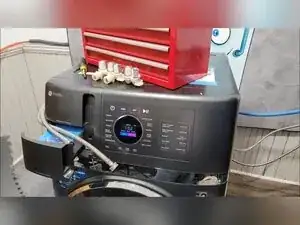
Use this guide when your GE Ultrafast Combo Washer Dryer shows an H2O supply error or will not fill. You will confirm water supply, inspect hose screens, read error codes, electrically test the inlet valves, and, if required, replace the complete valve assembly.


Peças
-
-
Turn both household supply faucets fully on and verify no one has shut them off.
-
Close the faucets, detach both fill hoses from the washer, and direct them into a bucket.
-
Open the faucets and confirm strong flow from both hot and cold hoses.
-
-
-
Locate the small mesh filters inside each rear fill port and lift them out with needle nose pliers.
-
Rinse the screens under running water and reinstall them if debris was present.
-
-
-
Enter diagnostic mode and note any codes referencing valves, pressure sensor, or main control.
-
-
-
Obtain a Phillips screwdriver, standard pliers, needle nose pliers, wire cutter, multimeter, and a parts tray.
-
-
-
Pull each drawer fully forward until it stops, press the rear tab, and slide the drawer completely out.
-
-
-
Slide the filter assembly forward, press the left-side tab, and withdraw the entire housing.
-
-
-
Grip the left front corner of the console, pull it forward, then lift upward to release the front hooks.
-
-
-
Wear an ESD-safe glove and carefully unplug the four marked connectors from the console PCB.
-
-
-
Extract the seven screws securing the blue top to the gray heat shield—two left, three top, two right (one is a wide interface screw).
-
Pull the cover forward, then upward; lift from the sides if it resists.
-
-
-
Set the multimeter to resistance (Ω) and touch the probes to the metal contacts of each harness while still connected.
-
A healthy coil reads 1000-1100 Ω; identical readings are expected across all five coils.
-
-
-
Take out the two screws on the hot side and two on the cold side that hold the valve block to the chassis.
-
-
-
Compress each spring clamp with pliers, slide it away from the barb, and twist the hose free.
-
-
-
Transfer hoses to the new valve, matching the original orientation, and secure each clamp.
-
Seat the threaded inlets through the chassis and align the block, wiggling if threads snag.
-
Reinstall the four mounting screws and reconnect all five harnesses and the cable tie.
-
-
-
Lower the cover onto the four plastic locator pegs and slide it rearward until flush on all sides.
-
-
-
Route harnesses through existing tie points and plug in the dispenser, NTC, door light, and main power connectors.
-
-
-
Hook the console over the two wide screws on the right, press inward, then slide left until the latches engage.
-
-
-
Hold the dispenser frame forward while driving the four upper and one lower screw to avoid cross-threading.
-
-
-
Align the lower drawer’s bottom groove with its rail, push both drawers fully in until they click.
-
-
-
Plug the washer dryer back in, run a quick cycle, and confirm proper water fill without errors.
-
Your washer dryer should now fill correctly. If the problem persists, further diagnosis of the pressure sensor or control board may be required.