Introdução
Water that leaks from the ice-maker area can saturate the rear insulation, freeze, and turn the refrigerator skin into an exposed evaporator. That moisture eventually rusts through the cabinet, threatens floors and walls, and can destroy cooling performance. This guide shows you a last-resort field repair so you can keep an otherwise good refrigerator out of the landfill.


Peças
-
-
Unplug the refrigerator from the wall outlet.
-
Tape the ice maker and water supply lines away from the rusted section to keep the workspace clear.
-
-
-
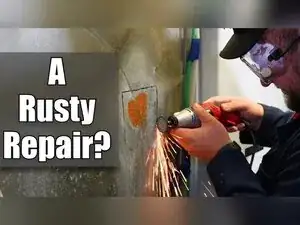
Score a rectangle around the rust leaving a two-to-three-inch margin with a rotary cutting tool and metal blade.
-
Lift off the cut panel and any loose rust with needle nose pliers.
-
-
-
Inspect the cavity; ice-filled foam feels hard and reads cold on an IR camera.
-
Let the unit sit unplugged until the foam softens; overnight is usually enough.
-
-
-
Dig out dark, soggy insulation until only dry, light-colored foam remains.
-
Press on questionable areas; if water oozes out, remove that section too.
-
-
-
Measure clearance and maintain roughly a quarter-inch gap between the pipe and the future back panel plane.
-
Gently push the pipe inward with a rubber mallet, wooden dowel, or fingers if it touches the metal.
-
-
-
Shake a can of moisture-resistant low-expansion spray foam as directed.
-
Insert the nozzle behind the pipe and fill the space from back to front in slow passes.
-
-
-
Cut a flat sheet of closed-cell insulation to match the opening size.
-
Press the sheet into the cavity so it sits flush without overlapping the factory metal skin.
-
-
-
Run a continuous bead of silicone sealant around the perimeter of the new foam sheet.
-
Tool the bead smooth to eliminate air gaps and improve adhesion.
-
-
-
Cover the repair with overlapping strips of foil HVAC tape.
-
Press each strip firmly with a putty knife to lock the adhesive and remove air pockets.
-
-
-
Reconnect any lines moved earlier and plug the refrigerator back in.
-
Operate the unit for at least one week while monitoring the patched area with touch or an IR camera.
-
With the insulation restored and the cabinet resealed, your refrigerator should stay dry and maintain proper cooling. Complete the matching ice-maker air-gap repair to prevent moisture from returning and keep an eye on the back panel for any future rust.