Introdução

You may want to iron your waterproof jacket if it's gotten a little wrinkly, or if it's just been washed and you don’t have access to a dryer but still want to restore its water-repellent finish. Applying heat is key to both smoothing out the fabric and reactivating the DWR coating. While a dryer is ideal for both of these purposes because it evenly distributes heat across the entire garment, using an iron is better than no heat at all!

Every jacket is different, so pay close attention as you iron. Avoid ironing over drawcords, zippers, or other closures that can create a bumpy surface or risk damage. If you don’t have an ironing board, no problem—just fold up a towel on a solid heat-resistant surface like a table or countertop to create a makeshift ironing station.

Related Tutorials

Related Wikis

Return to the Patagonia Care & Repair homepage.

  1. efX4NwbwtMlGbpVO
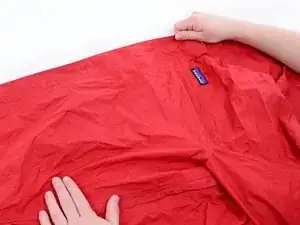
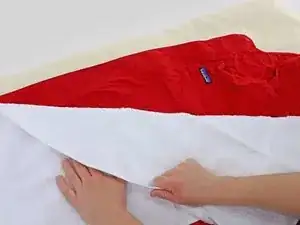
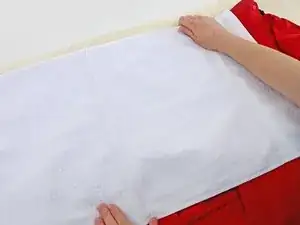
    • Unzip your clean jacket and slide one half over your ironing board or towel-covered surface.

    • You only want to iron through one layer of the jacket at a time. Ironing through two layers can create creases in the bottom layer.

    • Flatten your jacket with your hands.

    I was not aware that this type of jackets can be ironed also.

    Dineo Futho -

  2. 5vfb4TEOxCHZrlvO
    5vfb4TEOxCHZrlvO
    M4TldmImSdGCSQea
    pB3wkC2DdSTvfOeY
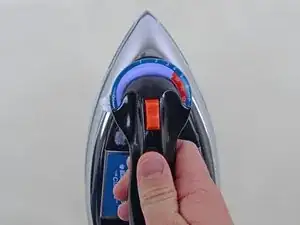
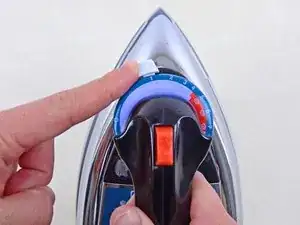
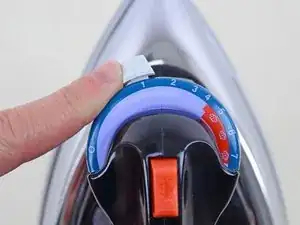
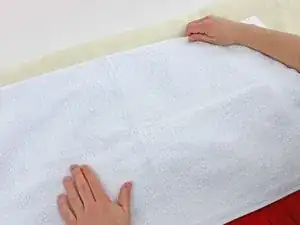
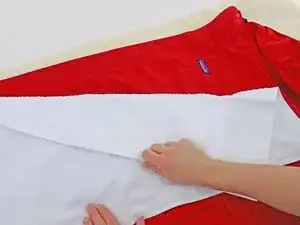
    • Set the iron to its lowest heat setting, below 230 °F.

    • Turn off the steam function. Steam can damage the fabric and the DWR coating. If you can't turn off the steam function on your iron, drain the water chamber completely.

  3. gFeplj3KVLIPjeDW
    gFeplj3KVLIPjeDW
    CjoByCGsWWJN2BwU
  4. rWVUoKmjK2IbKEr1
    rWVUoKmjK2IbKEr1
    sfj4XUtUkUZlv32r
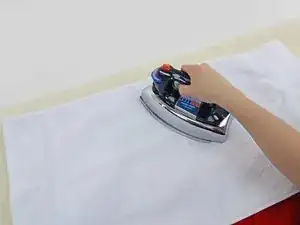
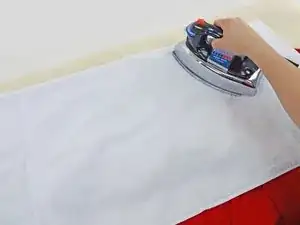
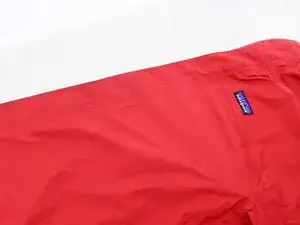
    • Iron in one smooth stroke, running parallel to the zipper.

    • Only iron in one direction, don't go back and forth or you risk creating creases. Change directions only when you move to a new section of the jacket.

    • Don't press down. Let the heat and weight of the iron do the work.

    • Keep the iron moving continuously to avoid melting or burning the fabric.

  5. NtL3ALiNQgSDiXlx
    NtL3ALiNQgSDiXlx
    N4pYFEyJGsUjGI1K
    jASd2pD2qNOMgYYb
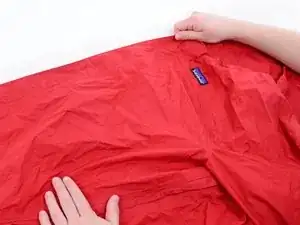
    • Remove the towel and inspect the jacket.

    • If the fabric looks unchanged, increase the heat slightly and try again.

    • If the area looks smooth, move on to the next section.

    Thanks very much for your great sharing! It is indeed really helpful. I was wondering how to clear the “wrinkles” on rain jackets we have newly bought for hiking use.

    AILEEN WONG -

    thank you so much yall helped me out a lot

    Aura Mothoa -

    Great advice…really helpful…! Thank you..:-)

    Caroline Falvey -

    Helpful! But I am wondering if a jacket that is old has that gray waterproofing fused lining disintegrating at the neckline where the hood comes but is otherwise okay, could any fusible patch work? (It is not Patagonia). beinzig6@gmail.com

    Barbara Einzig -

    and after all this, is it still waterproof. no mention of reproof g it. wondering as other sites, from the people that actually create the jackets, says no. do t do it. as it affects the waterproofness. which is, as we know... the whole point of the said jacket

    Tracy Cooper -

    • To fully reactivate the DWR coating, heat must make contact with every part of the jacket. Go slowly and work in small, manageable sections to ensure even coverage.

    • Be extra careful around tight or curved areas like hoods, cuffs, and sleeves.

    • For the sleeves, slide a tailor’s ham, sleeve board, or folded towel inside the sleeve to separate the two sides.

    • Continue repositioning the jacket and repeating the ironing process until the entire surface has been treated.

    • Don't forget to turn off the iron when you're finished.

Clara Redwood

Membro desde: 12/11/24

2559 Reputação

17 comentários

Thank you, good advice for younger generation who have clue.

keirakeith26 -

Thank you - good reminder for the older generation who have lost their marbles

Swag McYolo -

Thank you- good reminder for the baby boomer middle aged who voted for Brexit and haven't got a clue.

fixxysugar -

謝謝,對於說中文的外國人來說,這是一個很好的建議,即使他們沒有失去彈珠,他們也沒有投棄權,但仍然沒有任何線索。

艾爾伯特愛因斯坦 -

I hope the non-English comment is also in the same form as the first 3.

Eva -

Thank you, good reminder for the younger cotton pickers who had no idea how! And shoutout to the caveman too!

Dany Biresom -

Thank you, good advice for the greek single 30year old, who is too old to be asking his mother to do his ironing. But he does… ;);)

Petran07 -

Good advice for a Scottish baby boomer who definitely DIDN'T vote for Brexit!

Linda Whyte -

Thank you! Good advice for kid who has clothes worth 3 dollars and 1 moncler jacket worth 1000$!

_ Kløvedal -

Most of these comments are just boomers and foreigners

Yes -

Thank you this was good advice for someone looking for entertainment in the comments section.

Anyone interested in the google translation of the Chinese comment see below:

Thank you, this is a good suggestion for foreigners who speak Chinese. Even if they did not lose their marbles, they did not abstain, but there is still no clue.

Chris -

oohhhhh really helpful thanks for this blog…. But I have a question did we follow these steps on leather jackets??

William James -

I want to express my gratitude for sharing this helpful article that I personally think is very good. If you are fond of this type of jacket, I highly recommend you to check it out. Tops and bottoms online store.

david hudson -

I hope I don't burn me jacket!

P P -

At what temperature should the iron be?

Federica Galbiati -

Use the lowest temperature setting for your iron. You may want to test it on a discrete part of the jacket first to make sure your iron's lowest temperature is low enough!

Spencer Pennington -

Very helpful I’ve been searching on how to do that since yesterday 🤩 thank you for sharing this info i truly appreciate your effort..🌹

Moaza Aref -