Introdução
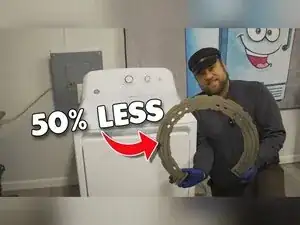
If your GE electric dryer tumbles but never warms, the heating element inside the rear heater pan is probably open. The factory solution is to replace the entire pan, yet an aftermarket mica heater costs roughly half as much and restores full performance when installed correctly. This guide shows you how to swap that element, avoid the sharp metal edges common on GE cabinets, and verify the repair before you button everything up.


-
-
Unplug the dryer from its power source and slide the cabinet forward so the back panel is accessible.
-
-
-
Remove the two ¼-inch hex screws located at the lower corners of the rear panel.
-
Strike both console ends with the palm to push the console rearward until its front tabs release.
-
-
-
Lift the loosened console upward to rest on top of the cabinet.
-
Remove the two Phillips screws at the upper rear corners of the console housing.
-
-
-
Open the dryer door and locate the two Phillips screws hidden under the front lip of the lid opening.
-
Remove both screws and gently swing the lid back toward the wall, using the console as a rest.
-
-
-
Detach the drum-light harness from the left top corner of the front panel if your model is equipped with it.
-
-
-
Tilt the front panel forward and support it so the short door-switch harness is visible.
-
Slide the plastic shield aside, press the latch and unplug the door-switch connector.
-
Lift the panel straight up to clear the three lower locating fingers and move it away from the dryer.
-
-
-
Reach through the front opening and pull the idler pulley to the right to slacken the belt.
-
Slide the belt off the motor shaft and idler pulley.
-
-
-
Unplug the two sensor wires on the upper left of the heater pan.
-
Unplug the sensor wire on the upper right of the pan.
-
Remove the purple supply wire and the two blue element wires from the heater terminals.
-
-
-
Remove the four ¼-inch hex screws holding the heater pan to the cabinet.
-
Pull the pan completely out and place it on a flat work surface.
-
-
-
Bend the locking tab away from the mica heater using pliers or a flat blade screwdriver.
-
Rotate the old heater counter-clockwise until its tabs clear the slots in the pan.
-
Lift the heater out, working around any warped tabs until it is free.
-
-
-
Place the new aftermarket mica heater element into the lower slots of the pan, keeping the terminals oriented like the original.
-
Press the heater evenly so it sits flush all around the rim.
-
Rotate the heater clockwise until every tab locks under the pan edges.
-
-
-
Hold the heater pan against the cabinet and install one mounting screw by hand.
-
Install the screw opposite the first, then add the remaining two to fully secure the pan.
-
Reconnect the three sensor wires and the three element wires to their original terminals.
-
-
-
Position the drum in the cabinet, guiding the rear bearing straight into its socket.
-
Verify the belt sits in the rear groove that shows the old belt mark.
-
Route the belt around the motor shaft, then release the idler pulley to tension it.
-
-
-
Spin the drum by hand to confirm the belt moves the blower wheel smoothly without snagging.
-
-
-
Set the front panel back onto the three locating fingers at the bottom of the cabinet.
-
Reconnect the door-switch harness and slide the plastic cover back over the connector.
-
Pivot the panel upright, making sure the drum bearing seats into the felt on the door frame.
-
-
-
Install the two ¼-inch hex screws at the top corners of the front panel.
-
Lower the lid and install the two Phillips screws removed from the door opening earlier.
-
Push the lid forward until it snaps onto the chassis.
-
-
-
Plug the dryer back in and run a timed-heat cycle to verify that the element glows and air temperature rises steadily.
-
-
-
Remove power again, then reinstall the two rear Phillips screws that secure the console housing.
-
Pivot the console forward and tap its rear edge to lock the six fingers into the lid slots.
-
Reinstall the two ¼-inch hex screws at the bottom rear corners of the cabinet.
-
Replacing only the mica heating element restores full heat while saving significant money over a complete heater-pan assembly. Keep the gloves handy for any future servicing, and double-check wire connections anytime the dryer loses heat.