Introdução
If you drive a 2012 Audi A5 and are experiencing decreased fuel economy, are struggling to start your engine, or are experiencing poor acceleration, it may be due to faulty spark plugs. This guide will explain how to replace the spark plugs for a 2012 Audi A5. This includes locating the installed spark plugs, removing the faulty spark plug(s), and installing new spark plug(s).
Spark plugs are necessary for the function of the car's engine because they ignite the fuel within the engine's cylinders to drive the pistons. This energy is then transferred to the wheels allowing the car to drive forward. These typically need to be replaced every 30,000 to 100,000 miles.
As is common for automotive repairs, it is imperative to turn off the car, allow for the engine to cool, and disconnect the car battery before beginning work on the engine.
Park the car on level ground and engage the parking brake. Wait at least 30 minutes after shutting off the engine before beginning the repair to allow for the engine to cool.


Peças

-
-
Move to the rear of the car.
-
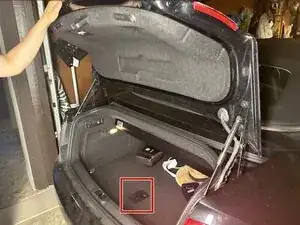
Open the trunk.
-
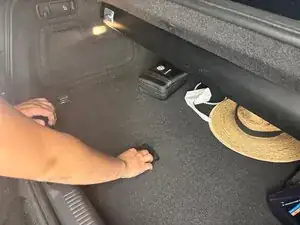
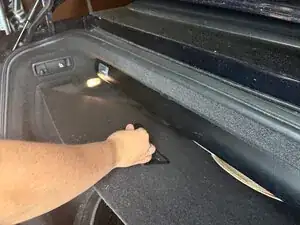
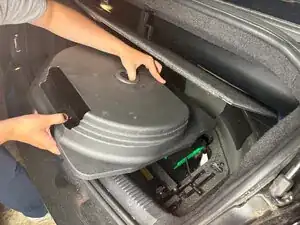
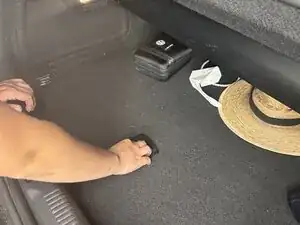
Grasp the handle on the floor of the trunk and lift the floor panel to access the spare tire.
-
-
-
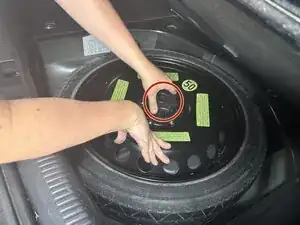
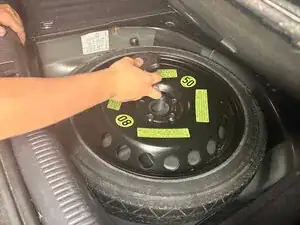
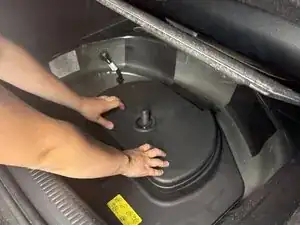
Remove the center hold-down by turning it counterclockwise.
-
Move the spare tire out of the well and place to the side.
-
-
-
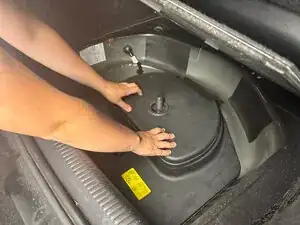
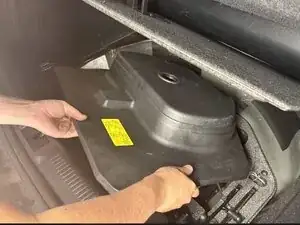
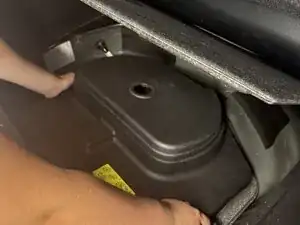
Grasp the outside edges of the panel beneath the spare tire or the central hole and pull it upwards.
-
-
-
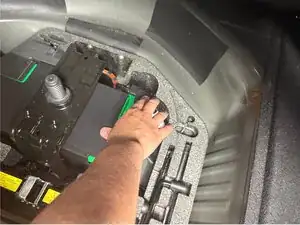
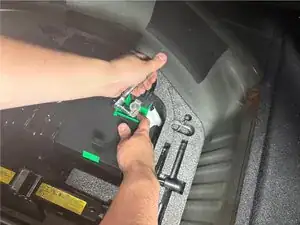
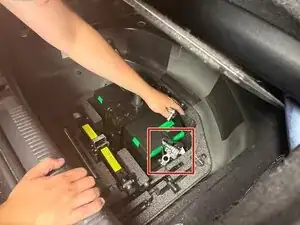
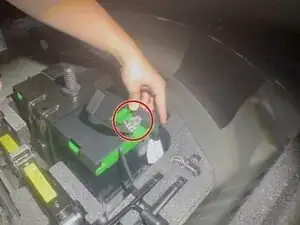
Locate the battery connection clamp on the innermost right corner of the trunk.
-
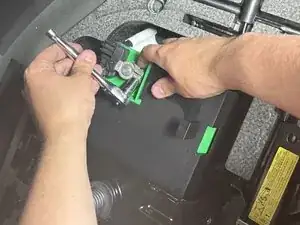
Loosen the negative (–) clamp with a 10 mm wrench by rotating the securing bolt counterclockwise.
-
Set the cable aside.
-
-
-
Move to the front of the car.
-
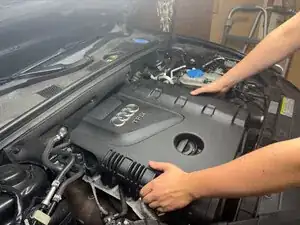
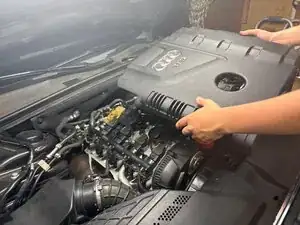
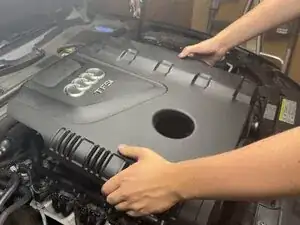
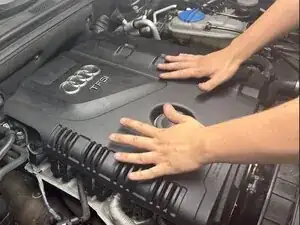
Remove the plastic engine cover:
-
Pull up on the front edge to release the front clip.
-
Pull up on the rear edge to release the rear clip.
-
Lift the cover off and set it aside.
-
-
-
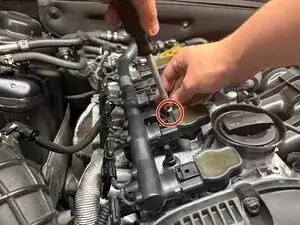
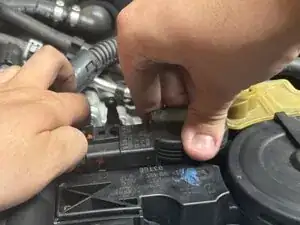
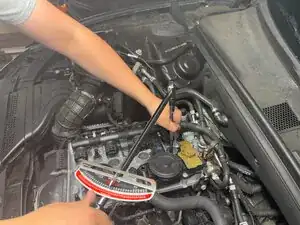
Using a T30 Torx screwdriver, remove the single screw connecting the coils to the power supply.
-
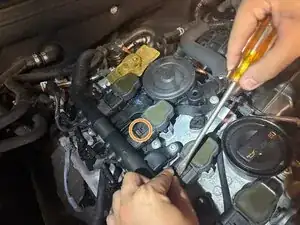
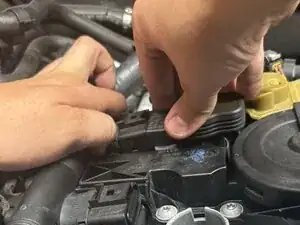
Remove the latches on the coils (the latches are broken on ours) by pushing the coil tabs in using a spudger.
-
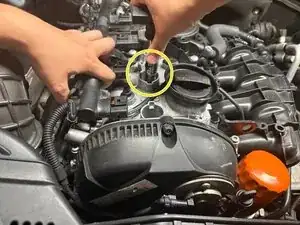
Remove the coil by holding the plug back and pulling it out.
-
Put these coils aside to be replaced later.
-
-
-
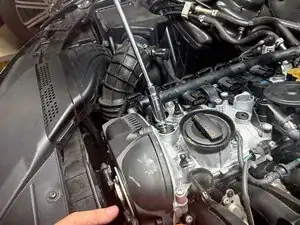
Use a 3/8" ratchet wrench with a 5/8" (16 mm) spark-plug socket to loosen the spark plug counterclockwise. Firm force may be required.
-
Finish unscrewing the spark plug by hand and remove it.
-
Safely discard the old spark plug.
-
-
-
Insert the new spark plug into the spark plug socket tool, ensuring not to insert it too far as to prevent the spark plug from being lodged in the tool.
-
Make sure, while inserting the new spark plug into the engine where the coils were removed, to twist without pushing down onto the socket excessively.
-
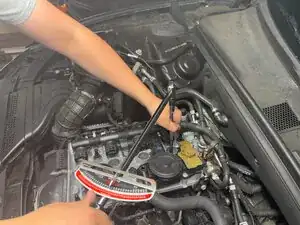
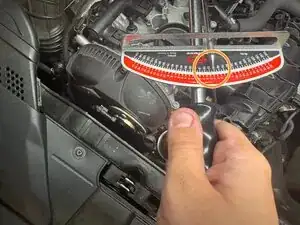
Using the torque wrench, torque the spark plugs up to 25 Newton-meters (Nm) or 22 foot-pounds (ft-lbs).
-
Repeat steps 7 to 9 with the remaining spark plugs if necessary.
-
-
-
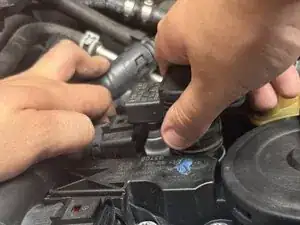
Reinstall the ignition coils by pushing each coil straight down until seated.
-
Reconnect the connector clips until they click.
-
Replace the screw connecting the coil screws to the power source that was removed previously.
-
-
-
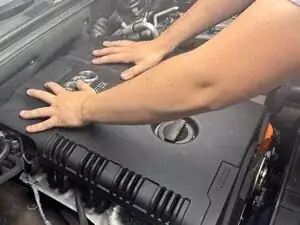
Reinstall the engine cover by aligning it and press down at the rear and front until both clips snap into place.
-
-
-
Locate the battery’s negative (–) post in the innermost right corner of the trunk.
-
Place the negative (–) cable clamp back onto the post, seating it fully.
-
Tighten the clamp’s 10 mm bolt clockwise until snug.
-
-
-
Replace the spare tire and secure it with the included screw top.
-
Lower the trunk floor panel to hide the spare tire.
-
Close both the hood and the trunk of the car.
-
Start the engine to ensure proper installation.
-